
A coffee menu in a serious café can be genuinely bewildering — the difference between a flat white, a cortado, and a small latte sounds like it should be simple but isn't, the macchiato means something completely different at Starbucks than it does in Italy, and the cold brew section introduces a third vocabulary entirely. The good news is that once you understand the two fundamental building blocks — espresso (concentrated coffee) and steamed milk (in its various textures) — the rest of the menu follows logically. Every espresso-based drink is a ratio. Every variation on that ratio has a name, a history, and a distinct character. This guide covers all of them, plus the non-espresso alternatives (filter coffee, cold brew, AeroPress) that complete the modern coffee landscape.
The Foundation: Espresso
Espresso is not a type of coffee bean or a roast level — it is a brewing method. Hot water (90–96°C) is forced through a compacted puck of finely-ground coffee at approximately 9 bars of pressure for 25–30 seconds, producing 25–35ml of concentrated, emulsified coffee extract. The defining characteristics:
- Crema: The golden-brown foam that sits on top of a correctly pulled espresso — an emulsion of coffee oils, CO₂ gas released from freshly-roasted beans, and water. Good crema is dense and persistent (should stay intact for at least 2 minutes); it dissipates quickly in stale or poorly-extracted espresso. Crema contributes bitterness and aroma but not strength.
- The shot: A standard single shot is 7–9g of coffee producing 25–35ml of espresso. A double shot (doppio) uses 14–18g producing 50–70ml — the standard in most specialty cafés, which rarely use single baskets.
- Strength vs concentration: Espresso is highly concentrated but not necessarily high in caffeine per volume — a standard double shot contains approximately 60–90mg of caffeine, roughly the same as a 240ml cup of filter coffee. Espresso is more caffeinated by volume, not by drink.
The Milk Drinks: Ratios Explained
The entire family of milk-based espresso drinks — latte, cappuccino, flat white, cortado, macchiato — is a spectrum of espresso-to-milk ratios. Understanding the ratio is understanding the drink. Milk texture matters too: properly steamed milk is heated to 60–65°C and stretched with steam to create microfoam — tiny uniform bubbles that give milk a glossy, velvety texture. "Foam" (for cappuccino) and "microfoam" (for latte/flat white) are different textures with different mouthfeel and sweetness.
Macchiato
Macchiato means "stained" or "marked" in Italian — an espresso "marked" with a small amount of milk. The traditional Italian version (caffè macchiato) is a single or double espresso with a teaspoon of foam on top: essentially espresso with a small amount of milk to soften the edge of the bitterness. Total volume: approximately 30–40ml. The macchiato at Starbucks is an entirely different drink — layers of milk with espresso poured over the top — which bears only a naming relationship to the Italian original.
Cortado
Cortado (from Spanish cortar — "to cut") is espresso cut with an equal or near-equal volume of warm milk — typically a double espresso with 40–60ml of steamed (not frothed) milk, for a total of approximately 80–120ml. The milk is steamed to about 60°C with minimal foam, creating a silky texture. The cortado is Spanish in origin (particularly associated with the Basque Country and Madrid) and is popular throughout Latin America. It is the most intense of the milk espresso drinks — the coffee flavour remains dominant.
Flat White
The flat white — one of the great café culture debates (Australia vs New Zealand both claim the invention, circa 1980s) — is a double espresso with approximately 120–160ml of microfoam milk at a 1:2 to 1:3 espresso-to-milk ratio. The defining characteristic is the texture: the milk should be smooth, velvety microfoam with no visible bubbles and no dry foam on top (hence "flat") — a glossy, even surface. The flat white occupies the middle ground between cortado (more concentrated) and latte (more milk). In most specialty cafés, it is served in a 150–180ml ceramic cup. The flat white arrived in British and US café menus largely in the 2010s and has become a benchmark drink for evaluating a café's milk-steaming technique.
Cappuccino
The cappuccino — the definitive Italian café drink, served throughout Italy as a morning drink almost exclusively (drinking a cappuccino after 11am is a tourist marker in Italy) — is approximately equal thirds espresso, steamed milk, and milk foam. The traditional volume is 150–180ml. The foam in a cappuccino is drier and more voluminous than flat white microfoam — the texture should be "dry" (containing significant air) and creamy, forming a dome above the cup rim. Italian cappuccino foam is often slightly stiff; Australian-style cappuccino uses wetter microfoam closer to latte texture. The name comes from the Capuchin friars — the colour of the cappuccino with its light brown foam cap resembles the brown robes of the Capuchin order.
Latte (Caffè Latte)
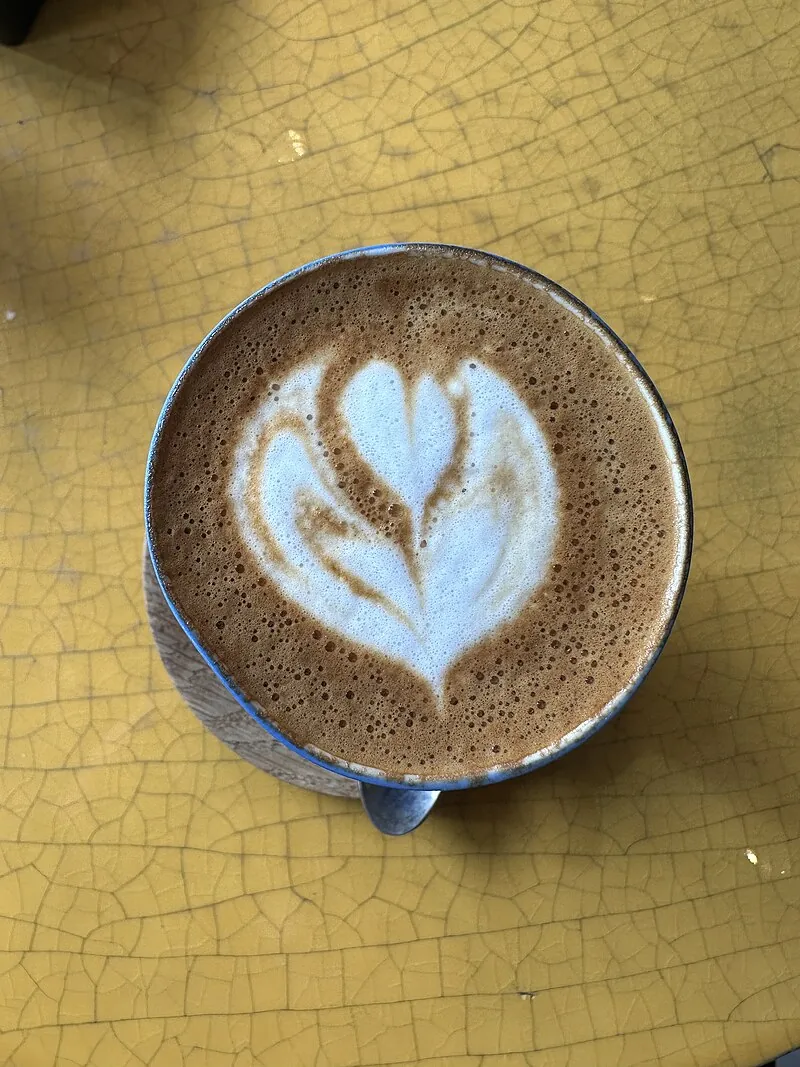
The latte (caffè latte — coffee with milk) is the milkiest of the standard espresso drinks: a double shot with approximately 200–300ml of steamed milk, served in a glass or large cup. The milk-to-coffee ratio (approximately 3:1 to 5:1) means the coffee flavour is gentle — a latte is the drink for those who want the ritual of café coffee with less intensity. In Italy, caffè latte is a home drink (literally coffee with milk, often filter or moka pot coffee with warm poured milk, not a specialty preparation) — the café latte as known internationally is more of an American/Australian specialty café innovation. Latte art (patterns created by pouring microfoam into the espresso) is the signature skill of specialty baristas.
Non-Milk Espresso Drinks
Americano
An Americano is an espresso diluted with hot water to approximately filter coffee strength — typically a double shot topped with 120–180ml of hot water. The name's most common origin story: American soldiers stationed in Italy during and after World War II found Italian espresso too strong, and Italian baristas accommodated them by diluting it. An Americano retains the espresso's distinctive flavour profile but at filter-coffee intensity. It is not the same as filter coffee — the extraction method differs, producing a different flavour profile even at equal concentration.
Long Black
An Australian/New Zealand variation of the Americano — the long black reverses the order: hot water goes into the cup first, then the espresso is poured over it. This preserves the crema (which is destroyed when water is added on top of espresso), producing a slightly different presentation and often a more aromatic result.
Ristretto and Lungo
Variations on the standard espresso shot: a ristretto ("restricted") uses the same coffee dose but only approximately 15–20ml of water — a shorter, more concentrated, sweeter shot with less bitterness (the bitter compounds extract later in the shot). A lungo ("long") uses more water — 50–70ml through the same dose — producing a larger, more bitter, less intense shot.
Non-Espresso Coffee Drinks
Filter / Pour Over / Drip Coffee
Any method that passes hot water through coffee grounds supported by a filter — paper or metal — producing a clear, clean-tasting coffee. This includes the automatic drip machine (the most common coffee brewer globally), the V60 pour over, the Chemex, and the Kalita Wave. Filter coffee extracts different compounds than espresso (no pressure, different grind size, different ratio) producing a lighter body, more delicate aromatics, and lower concentration — the best vehicle for appreciating the specific flavour nuances of high-quality, single-origin coffee.
Cold Brew
Cold brew is coffee steeped in cold or room-temperature water for 12–24 hours — not iced hot coffee, which is a different product. The cold extraction produces a concentrate (often diluted 1:1 or 1:2 for serving) with low acidity (pH 6.0–6.3 versus 4.9–5.1 for hot coffee), a smooth, sweet profile, and high caffeine (long steep time compensates for low extraction efficiency of cold water). Cold brew over ice, cold brew with oat milk, and nitro cold brew (nitrogen-carbonated, with a creamy head like Guinness) are the current high-growth segments of the coffee market.
Instant Coffee
Instant coffee — spray-dried or freeze-dried concentrated coffee extract — represents approximately 35–40% of global coffee consumption by volume, with the highest penetration in the UK (80% of home coffee consumption), Russia, Eastern Europe, and most of Asia. Freeze-dried instant coffee preserves more aroma than spray-dried. The technology was developed in 1938 (Nestlé, working at the request of the Brazilian Coffee Institute to find a use for surplus coffee). Specialty instant coffee (Voilà, Sudden Coffee) using freeze-dried specialty-grade coffee has emerged as a premium alternative in the 2020s.
Quick Reference: The Milk Drink Ratio Table
- Macchiato: ~30ml espresso + ~10ml foam. Intense, nearly straight espresso.
- Cortado: ~60ml espresso + ~60ml warm milk. Equal parts. Coffee dominant.
- Flat white: ~60ml espresso + ~100ml microfoam. 1:1.5 ratio. Balanced.
- Cappuccino: ~60ml espresso + ~60ml milk + ~60ml foam. Equal thirds.
- Latte: ~60ml espresso + ~180–240ml milk. Milk dominant. Gentle.
- Americano: ~60ml espresso + ~150ml hot water. Filter-strength, espresso flavour.
Related: How to Make Iced Coffee at Home | The Complete Pour Over Guide: V60, Chemex, and Kalita Wave