Order a latte macchiato in one cafe and a caffe latte in another and you may receive drinks that look nearly identical. Both feature espresso and steamed milk in roughly similar proportions, both are often served in tall glasses, and both sit comfortably in the warm, milky corner of the espresso menu. Yet they are genuinely different drinks with different pour orders, different textures, different visual effects, and distinct character. The difference matters both for what ends up in your cup and for the home barista who wants to make either drink correctly.
The Caffe Latte: Espresso First
The caffe latte, usually shortened to "latte" in English-speaking countries, is Italy's morning staple: a large, milky coffee intended to be consumed at breakfast. In Italian, "latte" simply means milk; "caffe latte" means coffee with milk. A traditional Italian caffe latte is made at home in a moka pot and served in a bowl or wide glass. The Italian bar version, however, follows the same basic sequence used in modern espresso cafes: espresso is pulled first into the cup, and steamed milk is poured over and through it.
The standard recipe for a caffe latte is one or two shots of espresso (30–60ml) combined with approximately 150–180ml of steamed milk and finished with a very thin layer of microfoam (typically 5–10mm). The espresso is at the bottom. When you pour milk into espresso, the two integrate: the result is a homogenous, evenly brown drink with a consistent flavour from first sip to last. The milk-to-espresso ratio is usually around 3:1 to 6:1, making it a gentler, less intense drink than a flat white (which uses a smaller milk volume) but stronger than a cappuccino with a larger milk portion.
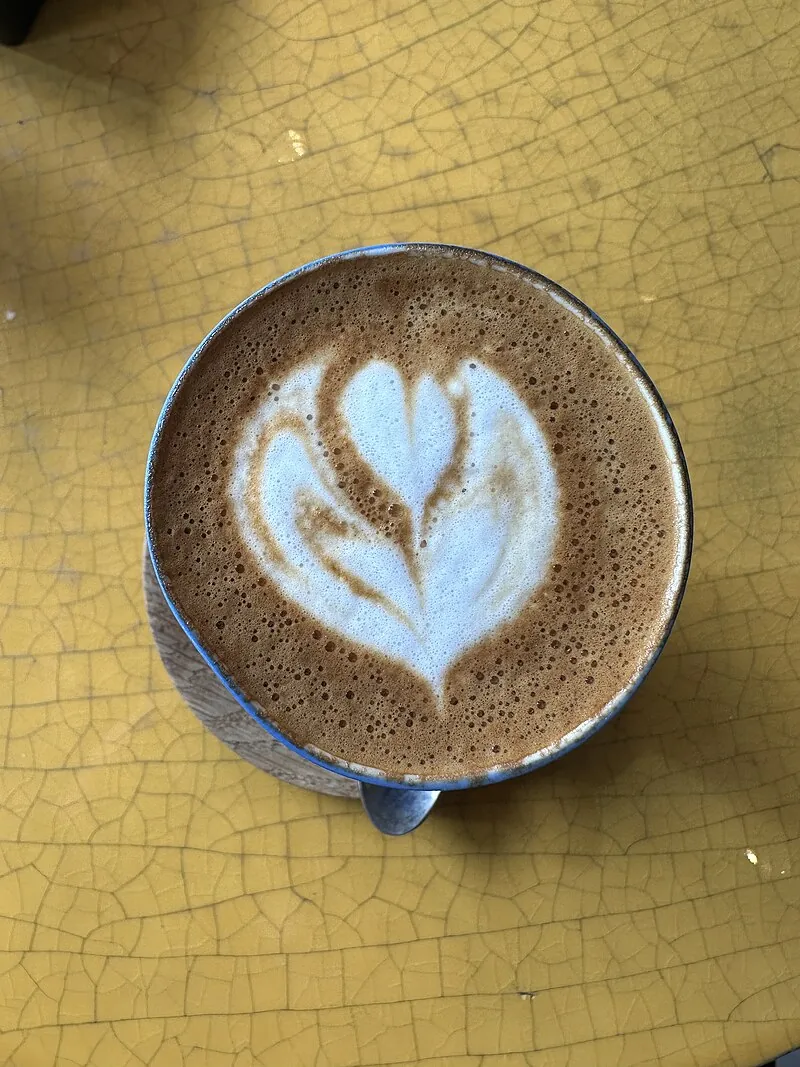
The caffe latte is the drink on which latte art is performed. Because milk is poured through the crema of the espresso from height, and then drawn into patterns near the cup's surface, the drink's construction is perfectly suited to hearts, rosettas, and tulips. Most latte art tutorials teach the caffe latte as the base drink.
The Latte Macchiato: Milk First
The latte macchiato reverses the construction order. In Italian, "macchiato" means stained or marked. A latte macchiato is a glass of steamed milk that has been "stained" by espresso poured through it. You build the drink by pouring steamed milk (with a substantial head of foam) into the glass first, then slowly pouring a single shot of espresso through the foam layer. The espresso, being denser than the foam but less dense than the full milk below, sinks partially and creates a visible layered effect: white foam on top, a caramel-coloured middle band of espresso meeting milk, and white steamed milk below.
This layering is the defining visual characteristic of the latte macchiato. When made correctly, you see three distinct bands in the glass, and the drink is traditionally served with a long spoon to let the drinker decide whether to stir the layers together or drink through them progressively. It is a more visually theatrical drink than a caffe latte.
The latte macchiato typically uses more milk than a caffe latte, often 200–250ml of milk to a single espresso shot, making it the milder, less coffee-forward of the two. The foam layer is thicker and more aerated. The espresso is not fully integrated into the milk; instead, it concentrates in the middle layer, creating a drink where the first sips (through foam) are milky and gentle, the middle sips are stronger, and the bottom is again pure milk. This is quite different from the caffe latte's consistent flavour throughout.
Starbucks and the Popularisation of the Latte Macchiato
Starbucks played a significant role in bringing the latte macchiato to mass market awareness outside Italy. The chain introduced the Latte Macchiato as a named menu item in the United States in 2015, marketing it as a premium "upside-down" layered drink made with Starbucks's Blonde Espresso roast. The visual layering made it highly photogenic and well-suited to social media, driving adoption among consumers who might not have previously differentiated between milk-forward espresso drinks.
Starbucks also popularised what it calls the Caramel Macchiato, a drink that causes some confusion. Despite its name, the Starbucks Caramel Macchiato is structurally a vanilla latte macchiato (milk poured first, espresso added through foam, caramel drizzled on top) rather than a traditional espresso macchiato (espresso stained with a small amount of foam). It has been on the menu since 1996 and remains one of the chain's best-selling drinks globally.
Which Is Stronger?
The caffe latte typically tastes stronger, even when both drinks use the same amount of espresso. The reason is integration. In a caffe latte, the espresso is fully dispersed through the milk from the beginning, so every sip carries the same coffee concentration. In a latte macchiato made with a single espresso shot and a large milk volume, the overall coffee-to-milk ratio is lower, and the espresso remains partially stratified, making the drink taste gentler and more milk-forward overall.
If you make both with a double espresso shot and the same volume of milk, the difference in perceived strength narrows, though the textural and layering differences remain.
Temperature Considerations
Milk steaming temperature affects both drinks, but the latte macchiato is more sensitive to it. To achieve clean layering, the milk must be steamed to approximately 60–65°C and have a dense, velvety texture with a substantial foam layer (at least 1–2 cm). Milk that is too hot loses foam structure; milk that is not foamed enough will not support the espresso layer and the bands will not form cleanly. The espresso must be poured slowly, ideally over the back of a spoon just above the foam's surface, to prevent it from plunging directly to the bottom.
For the caffe latte, the milk texture is microfoam, meaning tiny uniform bubbles that give the milk a wet-paint sheen. You want as little aeration as possible beyond a few millimetres of surface foam. This produces the smooth, glossy canvas needed for latte art. Temperature is the same (60–65°C) but the foam quantity and texture target differ significantly.
Which Works Better with Plant-Based Milks?
Oat milk is generally considered the best plant-based option for both drinks, and several barista-formulation products have been developed specifically to mimic dairy's steaming properties. Oatly Barista, Minor Figures, and Califia Farms Barista Blend all add higher fat and protein levels than standard retail versions to support foam formation. However, plant-based milks tend to produce larger, less stable bubbles than dairy, and they are more prone to splitting at high temperatures.
For the caffe latte, this matters less because you only need a thin microfoam layer and can work with slightly larger bubbles. The drink remains attractive and palatable. For the latte macchiato, unstable plant-milk foam is a real problem: the layering effect requires a foam layer that can support the weight of poured espresso for long enough to see the visual band form. Oat milk in barista formulations achieves this adequately, though rarely as cleanly as whole dairy milk. Almond and soy milks are more difficult to steam well and produce less consistent layering.
How to Make a Caffe Latte at Home
You need an espresso machine (or strong Moka pot coffee) and a way to steam or froth milk. A traditional steam wand on an espresso machine produces the best results, but a handheld milk frother or a French press for manual frothing works as a budget alternative.
- Pull a double espresso (approximately 36g of liquid from 18g of ground coffee, in 25–30 seconds) into a pre-warmed glass or large cup.
- Steam approximately 200ml of cold, full-fat milk. Position the wand tip just below the surface to incorporate a small amount of air (3–5 seconds), then submerge it deeper to heat the milk. Target 60–65°C. The milk should have a glossy, silky texture with minimal surface bubbles.
- Tap and swirl the milk jug to pop any large bubbles and recombine the foam. Pour immediately from close to the cup's rim, angling the jug and tipping it gradually. For latte art, tilt the cup toward you and pour through the centre of the crema.
How to Make a Latte Macchiato at Home
- Steam 200–220ml of cold milk with more aeration than for a latte: position the wand closer to the surface for 5–8 seconds before submerging, to incorporate more air and build a thicker foam layer. Target 60–65°C. The texture should be noticeably frothier than latte microfoam.
- Pour the steamed milk and foam into a tall glass. You want approximately 2–3cm of dense foam on top of the liquid milk.
- Pull a single espresso shot (approximately 18g liquid from 9g of ground coffee) separately.
- Hold a spoon just above the foam's surface and pour the espresso slowly over the back of the spoon. This distributes the espresso gently across the foam, allowing it to permeate and settle in the middle layer rather than plunging straight to the bottom.
- Allow 20–30 seconds for the layers to settle before serving. Do not stir.
Quick Summary
- Caffe latte: Espresso first, then steamed milk poured over. Fully integrated. Consistent flavour throughout. Better for latte art. Stronger coffee flavour.
- Latte macchiato: Steamed milk first, then espresso poured through foam. Layered. Milder, more milk-forward. More theatrical presentation. More foam.
- Both: Use the same ingredients. Taste best with freshly pulled espresso and milk steamed to 60–65°C.
Related: What Is a Flat White? The Complete Guide | The Ultimate Home Coffee Bar: Equipment, Costs, and Where to Start