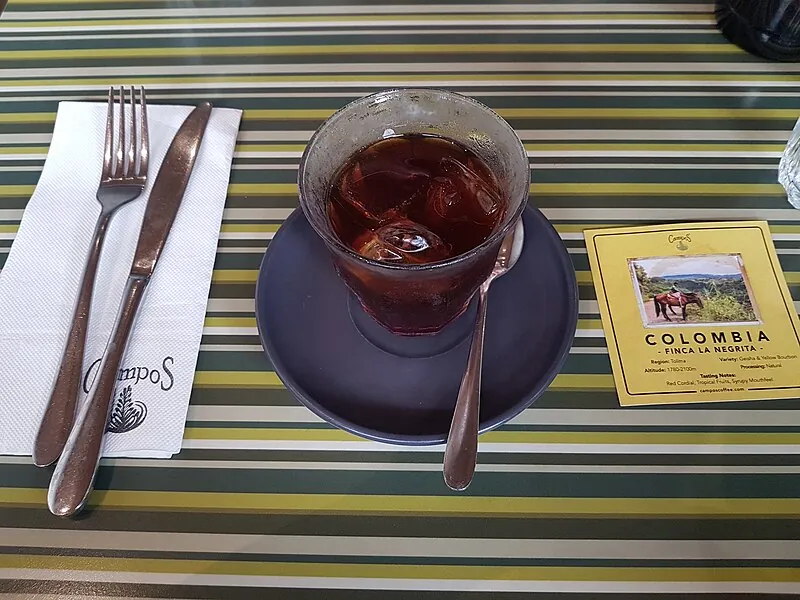
[Featured Image: A tall glass of cold brew coffee with ice, dark and glossy, on a marble surface. Source: Unsplash.com, search "cold brew coffee" — free commercial licence.]
Walk into any café in summer and you will see both on the menu — and often at very different prices. Cold brew typically costs $1–2 more than iced coffee. Are you being overcharged for a marketing term, or is there a genuine difference? There is — and it matters for flavour, caffeine content, acidity, and how you should be choosing between them.
The Fundamental Difference: Temperature During Brewing
Iced coffee: Hot-brewed coffee (espresso, drip, or pour-over) chilled and served over ice. The coffee is extracted hot — all the same compounds as a normal hot cup — then rapidly cooled.
Cold brew: Coffee grounds steeped in cold or room-temperature water for 12–24 hours. No heat involved at any stage. Entirely different extraction chemistry.
Flavour Comparison
| Characteristic | Cold Brew | Iced Coffee |
|---|---|---|
| Acidity | 60–70% less acidic than hot coffee | Same acidity as hot version |
| Bitterness | Lower — heat-sensitive bitter compounds not extracted | Same as hot brewed |
| Sweetness | Noticeably sweeter without added sugar | Standard |
| Body | Heavy, smooth, chocolate-like | Lighter, brighter |
| Caffeine | Higher (concentrate can be 2–3× a regular cup) | Standard espresso/drip level |
| Flavour nuance | Lower — cold extraction suppresses aromatic compounds | More of the bean's character |
How to Make Cold Brew at Home
Equipment: A large jar or pitcher, a fine mesh strainer or cheesecloth, and a container for storing the finished concentrate.
- Coarsely grind 100g of coffee (coarser than French press — almost chunky)
- Add 800ml of cold, filtered water
- Stir gently to ensure all grounds are wet
- Cover and refrigerate for 16–24 hours (longer = stronger, more concentrated)
- Strain through cheesecloth or a fine mesh filter — two passes for clarity
- Store concentrate in the fridge for up to 2 weeks
- Serve: dilute 1:1 with water or milk over ice (or drink straight over ice for double-strength)
This recipe makes approximately 600ml of concentrate — equivalent to 8–10 standard servings.
How to Make Japanese-Style Iced Coffee
The best iced coffee method — popularised by Japanese specialty cafes — brews hot directly onto ice, locking in aromatics and preventing staleness:
- Weigh 25g of coffee; weigh 200g of ice into your serving vessel
- Brew a pour-over with only 175ml of hot water (instead of the usual 375ml) — making it concentrated
- Let the hot coffee drip directly onto the ice, which melts into the brew and dilutes it to the correct strength
- Serve immediately — the flash-chilling preserves the coffee's bright aromatics perfectly
Which Should You Choose?
Choose cold brew if: you find regular coffee too acidic; you want maximum caffeine; you like chocolate and caramel notes; you want to make a large batch in advance; or you are adding milk or sweet ingredients.
Choose iced coffee (Japanese method) if: you want to taste the specific character of a bean; you prefer brightness and aromatic complexity; or you want to know exactly what went into your cup, freshly brewed.
Both are excellent. The worst option is neither — it's watered-down hot coffee left to go cold. That is simply sad coffee.
Related: Pour-Over vs. French Press | The Art of Espresso