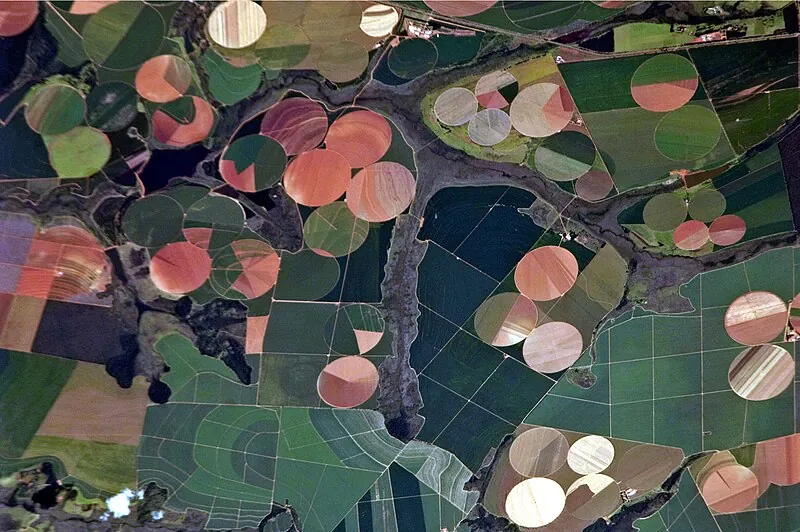
Brazil produces roughly 40 percent of the world's coffee supply, more than any other nation on earth, yet for most of the twentieth century it kept its best beans for export and drank the rest itself, heavily sweetened and often mixed with milk. The result was not a consolation habit but a genuine cultural institution: the café da manhã (literally "coffee of the morning"), a Brazilian breakfast ritual built around café com leite that has shaped the country's social rhythms, architecture, and sense of daily belonging as profoundly as any other food tradition in the Portuguese-speaking world. Understanding café com leite means understanding Brazil's relationship with its own most important crop, and the surprisingly complex distinctions that Brazilians have developed around a drink that outsiders often dismiss as simply "coffee with milk."
What Is Café com Leite, and How Is It Different from a Latte?
Café com leite is, at its simplest, brewed coffee mixed with hot milk, typically in a ratio of roughly half and half, though this varies by region, household, and personal preference. It is served in a large cup or glass, usually alongside bread, butter, cheese, or fruit, and consumed as the central beverage of the morning meal. Unlike a latte, which is built on a shot of espresso combined with steamed and microfoamed milk in a specific volume, café com leite is made from filter coffee (coado, meaning strained through a cloth or paper filter) mixed with heated or warm milk. The coffee is brewed strong by design, because it will be diluted by the milk, and the result is a mild, lightly bitter, warming drink that is more accessible than espresso-based drinks and better suited to prolonged morning sipping alongside food.
The distinction between café com leite and a latte is not merely technical but cultural. A latte is a barista-prepared café drink from the Italian tradition, consumed standing at a counter or seated in a café, representing a moment of individual pleasure or social meeting. Café com leite is a home drink, a family drink, the drink poured from the stovetop into your child's glass alongside their pão de queijo (cheese bread) on a Tuesday morning before school. It belongs to the domestic sphere in a way that Italian-derived espresso drinks do not, and that domestic intimacy is a central part of its meaning in Brazilian life.
The Pingado: A Crucial Distinction
Ask a Brazilian barista or café worker in São Paulo about the difference between a café com leite and a pingado, and they will likely answer with the confident precision that Brazilians bring to this particular question. A pingado is a small cup of hot milk with a splash (pinga, a drop) of strong coffee added, producing a drink that is predominantly milk with coffee flavor. It is the traditional drink for children in the café da manhã, for people with sensitive stomachs who find full-strength coffee uncomfortable, and for those who prefer the creamier, milder profile that results when milk is the base rather than coffee. The ratio in a pingado is typically 80 percent milk to 20 percent coffee, the inverse of a medium-strength café com leite.
The pingado is specifically associated with the padaria culture of São Paulo and other major urban centers, where the neighborhood bakery serves as a quasi-public living room. São Paulo's padarias open as early as 5:00 a.m., and the pingado at the balcão (counter) before work is a ritual with genuine social function: it is fast, affordable (typically R$3 to R$6, roughly $0.60 to $1.20 at 2024 exchange rates), and consumed standing, marking the beginning of the working day with a moment of communal ordinariness that has no precise equivalent in coffee cultures elsewhere.
Why Brazilian Coffee Is Dark Roasted
Brazilian coffee's reputation as a dark-roasted, heavy-bodied, low-acid coffee is not accidental. It reflects the specific combination of terroir, processing method, and historical trade economics that shaped Brazilian production over 200 years. Brazil's coffee-growing regions are predominantly low-altitude (600 to 1,200 meters, compared to the 1,500 to 2,200 meters typical of Ethiopian or Colombian specialty lots), which produces beans with lower acidity, lower aromatic complexity, and higher body than high-altitude lots. These physical characteristics make Brazilian coffees well-suited to dark roasting, which further reduces acidity and emphasizes the chocolatey, nutty, bittersweet notes that the beans naturally carry.
Throughout the twentieth century, Brazil's export-focused coffee economy directed its finest lots to European and North American markets, while domestic consumption was supplied by blending lower-grade beans with higher-grade ones, and roasting dark enough to mask defects. The result was a national coffee culture built on strong, dark-roasted, heavily sweetened coffee, and that culture persisted long after Brazil's specialty coffee sector began producing genuinely excellent lots from its Cerrado, Sul de Minas, and Mogiana regions. Today, Brazil's BSCA (Brazilian Specialty Coffee Association) grades coffees on an 80-to-100 point scale, and the country produces specialty lots scoring above 85 points that are exported to Japan, South Korea, and the United States. But domestic café culture remains oriented toward the traditional dark roast profile because it is what café com leite was built on, and changing it would mean changing the flavor of the morning itself.
São Paulo vs. Minas Gerais: A Regional Rivalry
The two most important states in Brazil's café com leite culture are São Paulo and Minas Gerais, and they approach the drink with distinctly different identities. São Paulo, Brazil's largest city and financial center, has a padaria culture that is fast, urban, and counter-focused. The coffee in a Paulistano café da manhã tends to be stronger and darker, the milk proportions slightly lower, and the drink consumed quickly at the balcão rather than slowly at a table. São Paulo's café culture absorbed waves of Italian, Japanese, and Lebanese immigration during the twentieth century, each of which influenced the city's relationship with coffee, and the result is a cosmopolitan coffee culture that sits alongside, rather than replacing, the traditional café com leite tradition.
Minas Gerais, the landlocked state that is Brazil's largest coffee-producing region by volume (responsible for approximately 50 percent of Brazil's total coffee output), has a café da manhã culture that is slower, more abundant, and more food-centered. The mineiro café da manhã is legendary in Brazil: a generous spread that may include pão de queijo (the state's most famous food, a chewy cheese bread made from cassava starch and Minas cheese), bolo de fubá (cornmeal cake), requeijão (a soft fresh cheese spread), cured pork sausages, and fresh tropical fruit alongside a large pot of café com leite. In Minas, the coffee is often made from beans grown within a few hours' drive of the breakfast table, and the milk from cattle pastured in the same cerrado landscape. This proximity of production gives the Minas café da manhã an integrated, local character that food writers have described as one of the most coherent regional breakfast traditions in Latin America.
How Café com Leite Shaped Brazilian Social Culture
The phrase "política do café com leite" (café com leite politics) refers to the power-sharing arrangement between São Paulo and Minas Gerais that dominated Brazilian federal politics from 1894 to 1930, alternating the presidency between coffee barons from São Paulo and dairy farmers from Minas Gerais. The phrase became shorthand for elite collusion and regional patronage, but it also reveals something genuine about the centrality of coffee and milk to Brazilian economic and social identity during the period of the Old Republic. Coffee was Brazil's primary export commodity, generating the wealth that funded industrialization, infrastructure, and immigration. Milk represented the domestic agricultural economy and the pastoral identity of Brazil's interior. Together, they were not just a breakfast drink but a symbol of the country's two dominant economic engines.
At the social level, the café da manhã ritual functions as a daily anchor of Brazilian family life in a way that parallels the role of the evening meal in many other cultures. Brazilian households, particularly outside the largest cities, typically eat breakfast together, and the preparation of café com leite by one family member for others carries an implicit language of care and routine. The act of putting the milk on to heat, brewing the coffee through the flannel cloth filter (the coador de pano, which remains more common in Brazilian homes than paper filters), and bringing both to the table together is a small domestic liturgy that millions of Brazilians perform every morning without reflection, precisely because it requires none.
Brazil's Specialty Coffee Shift and Café com Leite's Future
Since 2010, Brazil's domestic specialty coffee scene has grown significantly, driven by a young generation of baristas, roasters, and consumers who discovered that the country's best beans, properly roasted and brewed, could produce cups far more interesting than the traditional dark-roast café com leite tradition acknowledged. Cities like São Paulo, Belo Horizonte, and Curitiba now have thriving third-wave café scenes with single-origin filter coffee, competition-grade espresso, and light-roasted naturals from farms like Fazenda Santa Inês, Camocim, and Daterra, the last of which has been selling specialty lots to international buyers since the 1990s and recently received recognition at international cupping competitions.
But the rise of specialty coffee in Brazil has not displaced café com leite from its cultural position. It has instead created a dual culture: specialty cafés where young professionals order single-origin pour-overs and flat whites sit a few blocks from padarias where workers drink pingados at the counter at 6:00 a.m. Both traditions are authentically Brazilian. The specialty scene acknowledges the quality potential of Brazilian terroir. The padaria tradition acknowledges the social function that coffee with milk has served for generations. The most interesting development is that some of Brazil's better specialty roasters have begun producing lighter-roasted coffees that work well in café com leite, demonstrating that the drink's cultural form need not be tied to its historically dark-roasted content. Whether this refinement reaches the padaria counter or stays within the specialty café is the open question of Brazilian coffee's next decade.
Making Café com Leite at Home
Authentic café com leite requires nothing exotic: a coador (cloth or paper filter), ground coffee, milk, and a stovetop. Brew a strong pot of filter coffee using approximately 60 to 70 grams of coffee per liter of water, then heat whole milk in a separate saucepan until steaming but not boiling (approximately 70°C). Pour coffee and hot milk simultaneously into a large cup or glass in your preferred ratio. Brazilians typically add sugar during brewing or directly to the cup; the traditional sweetener is refined white sugar, though the specialty coffee shift has introduced unsweetened versions to urban menus. Serve with pão de queijo if available, or good bread and butter as a practical substitute. The ritual, rather than the recipe, is what makes café com leite what it is: the morning, the table, the unhurried cup before the day begins.
Related: Italian Espresso Culture: The Rules and Rituals of Italian Coffee | Vietnamese Coffee: Cà Phê Sữa Đá and the Robusta Tradition