
Italy did not invent coffee. The beverage arrived in Venice from the Ottoman Empire around 1570, and the first European coffeehouses opened in Venice and Oxford within decades of each other. What Italy did invent, through a combination of mechanical engineering and deeply specific cultural preference, was espresso. Angelo Moriondo of Turin patented a large-scale steam-driven coffee machine in 1884. Luigi Bezzera refined the design in 1901. Desiderio Pavoni bought the patent and began manufacturing machines commercially in Milan in 1905. By the mid-twentieth century, espresso was not merely a coffee preparation in Italy; it was a daily ritual with its own architecture of bars, its own vocabulary, its own economics, and its own rules, most of which are never written down anywhere but are enforced with quiet precision by everyone who makes and drinks coffee in the country.
What the Italian Bar Actually Is
In English-speaking countries, "bar" implies alcohol. In Italy, the bar is simply the standard coffee-and-refreshments counter. Italians visit their local bar, often the same one for years or decades, to drink a quick espresso standing at the counter in the morning, to meet a friend in the afternoon, or to have a spritz in the evening. The bar is not a specialty café or a sit-down restaurant. It is an everyday institution, a social infrastructure point, as ordinary as a bus stop. There are approximately 150,000 bars in Italy, one for roughly every 400 people. Most are small, owner-operated, and serve coffee as their primary economic engine.
The etiquette begins at the entrance. In most bars, particularly in Naples and southern Italy, you pay first at the cassa (cash register), receive a small receipt (lo scontrino), and hand it to the barista at the counter. In northern cities and more tourist-facing bars, payment after service is common. The distinction matters: walking up to the counter and ordering without paying first in a scontrino-required bar marks you immediately as a foreigner unfamiliar with the system.
Standing at the Counter Is the Normal Way
Espresso at the bar in Italy is consumed standing. This is not merely convention; it is the architecture of the experience. The counter is high and narrow. Cups are small. The drink takes about 90 seconds to consume. Many Italians drink their morning espresso in under two minutes, exchanging a few words with the barista, and leave. This efficiency is not coldness; it is integration of coffee into the rhythm of daily life rather than a special occasion requiring seating and a laptop.
Sitting at a table is a different transaction. Most Italian bars that offer table seating charge a separate, higher price for the same coffee consumed seated. The distinction is formal and sometimes marked on the menu as "al banco" (at the counter) versus "al tavolo" (at the table). A seated espresso in a central Rome bar can cost two to three times the counter price. At the famous Caffè Florian in Venice's Piazza San Marco, founded in 1720 and one of the oldest operating cafés in Europe, a seated espresso with service costs around 10 euros compared to about 1.30 euros at the counter of any ordinary Roman bar.
The Price of Espresso and Why It Has Been Politically Sensitive
The price of an espresso at an Italian bar has been a matter of cultural and economic significance for generations. For most of the postwar period, Italian coffee prices were regulated by the government as a social good. Deregulation in the 1990s allowed prices to rise, but competitive pressure and cultural expectation kept them stable. In 2023, the average price of a standard espresso at an Italian bar was approximately 1.10 to 1.30 euros across most cities, with Naples historically charging less than the northern average, a point of local pride.
When bar owners in any Italian city have attempted to raise espresso prices significantly, the response has often been media coverage, political comment, and customer resistance entirely disproportionate to the price increase involved. A 10-cent increase can generate national newspaper coverage. The espresso price is, in a meaningful sense, an index of the Italian cost of living and a cultural line that many Italians feel strongly about holding.
The Milk-After-11am Rule
The single most widely discussed Italian coffee custom outside Italy is the resistance to ordering a cappuccino, latte, or any other milk-heavy coffee drink after late morning. This is not, as it is sometimes caricatured, a rule invented to mock tourists. It has a physiological logic that Italians regard as obvious: milk is heavy and filling, and a large milk-based drink in the afternoon or after a meal impairs digestion and negates the digestive benefit that a short, strong coffee provides. Espresso after a meal is believed (with some scientific support) to stimulate gastric motility. A cappuccino achieves none of that and adds substantial calories from whole milk.
The approximate boundary is 11am, though in practice many Italians are flexible about this with guests and increasingly so in tourist-facing bars. What remains genuinely unusual, and may generate a raised eyebrow from an older barista, is ordering a cappuccino after a full lunch or dinner. The macchiato (espresso with a small stain of milk foam) is an exception and is drunk at any time. The caffè latte, a weaker combination of coffee and steamed milk in a glass rather than a ceramic cup, is a morning drink and not to be confused with the international "latte," which most Italian bars do not serve as a default menu item.
The Standard Italian Coffee Vocabulary
Ordering correctly in an Italian bar is a small but meaningful competency. "Un caffè" means a single espresso. Nothing else. There is no disambiguation required; it is the default. To specify a double shot, you ask for a "doppio." A "caffè ristretto" is a shorter, more concentrated pull using the same dose of grounds but less water, typically 15 to 20ml rather than the standard 25 to 30ml. A "caffè lungo" extends the water and produces a longer, slightly more diluted cup. A "caffè macchiato" is espresso with a small amount of milk foam. An "americano" is espresso lengthened with hot water and is available but rarely what Italians themselves order.
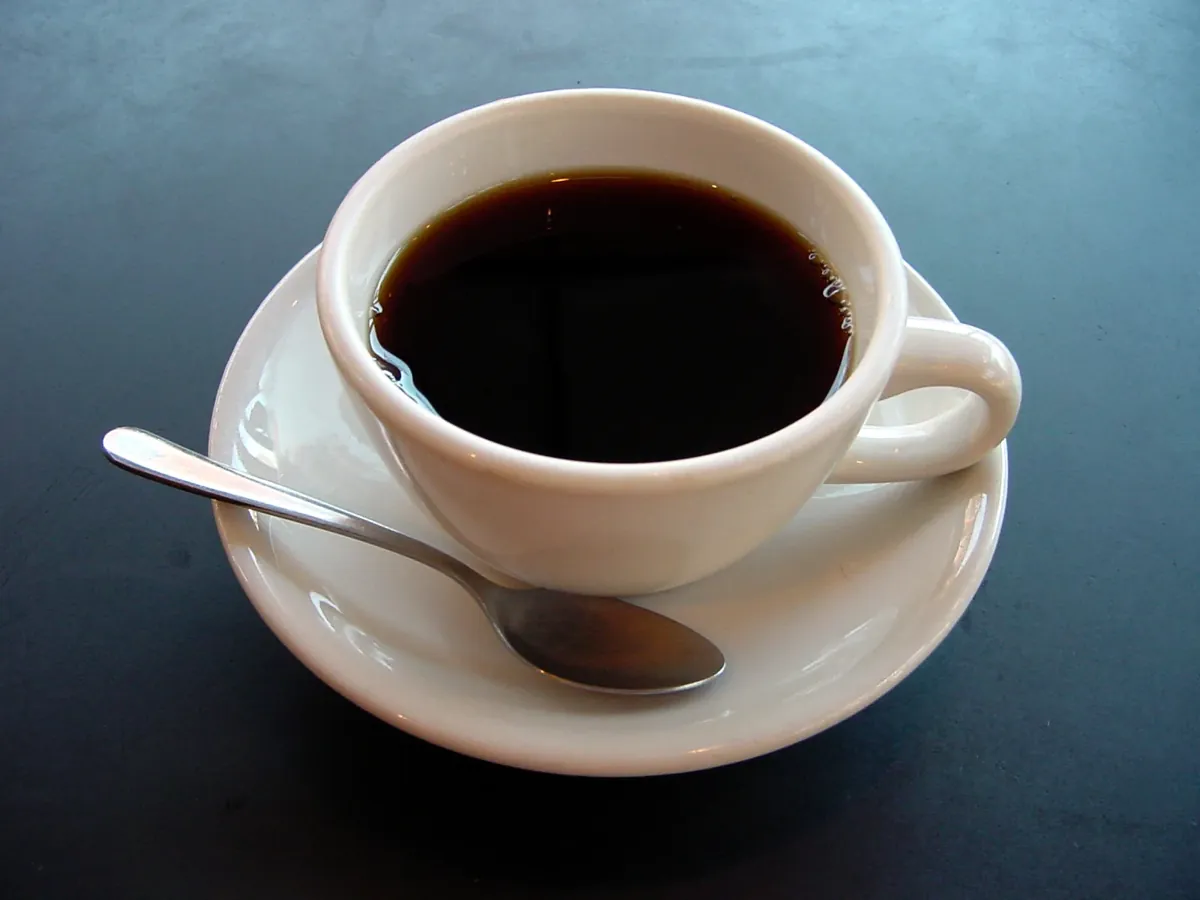
A "cappuccino" is 25ml espresso with approximately equal parts steamed milk and microfoam, served in a ceramic cup of around 150 to 180ml. It should not overflow the cup. The international café trend of serving cappuccinos in large 300ml bowls is viewed in Italy with the same quiet bafflement that Italians reserve for pineapple on pizza. A "caffè corretto" is espresso corrected with a small measure of grappa, sambuca, or whisky. It is a morning drink in some regions, particularly in the northeast, consumed for warmth during cold months rather than as a cocktail.
Regional Variation Within Italy
Italy is not uniform in its coffee culture. Naples is the most celebrated coffee city and the origin of much of what the world recognises as Italian espresso tradition. Neapolitan espresso uses a darker roast, extracts with slightly more water pressure, and the resulting cup is stronger, slightly sweeter, and more robust than the average northern Italian espresso. The bar culture in Naples is particularly dense and fast-moving, with some of the busiest bars in the city serving hundreds of coffees per hour.
Milan, by contrast, has a more northern European sensibility and a café culture that has incorporated more international third-wave influence. Specialty coffee shops using single-origin beans, lighter roasts, and alternative brewing methods have established themselves successfully in Milan in a way that would be harder in Naples, where loyalty to the traditional robusta-arabica blend is a matter of identity rather than preference.
Turin, the city of espresso's mechanical origins, has a rich café heritage of its own. The historic caffè culture of Turin's arcaded streets produced caffè al bicerin, a layered drink of espresso, drinking chocolate, and cream that has been served at Caffè Al Bicerin since 1763 and received protected geographical indication status in 2001.
The Italian Espresso Standard and the "Rules" Debate
In 2011, the Italian Espresso National Institute (Istituto Nazionale Espresso Italiano) published a certified standard for "Certified Italian Espresso" defining parameters including a dose of 7 grams of coffee, ground to a specific fineness, extracted at 88 degrees Celsius with 9 bar of pressure, for 25 to 30 seconds, yielding 25ml of liquid with a persistent reddish-hazel crema. Debate about whether this standard is too rigid or not specific enough continues within Italian coffee professional circles.
In 2022, Italy formally submitted "Italian espresso coffee culture" for inclusion on UNESCO's Intangible Cultural Heritage list, placing it alongside Neapolitan pizza-making (added in 2017) as a protected cultural practice. The submission emphasizes the social role of the bar, the skill of the barista, and the daily communal ritual as much as the technical preparation of the beverage itself.
Visiting Italy and drinking coffee correctly, meaning quickly at the counter, in a small cup, with appropriate vocabulary, and at the right time of day for milk-based drinks, is not about following arbitrary rules to impress locals. It is participation in a daily ritual that has genuine social meaning for the people who live it. The espresso is not the product. The bar, the conversation, the scontrino, and the 90-second pause in the working day are the product. The coffee is what makes the pause worthwhile.
Related: The Ristretto Explained: Italy's Most Concentrated Coffee | The Flat White vs Cappuccino: What Actually Differs