
Somewhere in Penang, Singapore, Kuala Lumpur, or a smaller Malaysian town, an old man with a cloth over his shoulder is pulling a stream of hot coffee through the air between two containers, stretching it into a long arc to cool and aerate it before pouring it into a glass already containing a measure of sweetened condensed milk. The coffee is robusta, roasted with sugar and sometimes butter or margarine until dark and glistening. The milk is from a tin, Carnation or Fraser and Neave, sweetened to a richness that would alarm a Western nutritionist. The result is kopi: thick, intensely sweet, slightly charred, bitter underneath the sweetness, and absolutely specific to a place and a tradition that has been producing this drink in roughly the same way since Hokkien Chinese immigrants established the first kopitiams in Singapore and the Malay Peninsula in the late nineteenth century. It is not third-wave coffee. It is not even particularly interested in being anything other than what it is. In the world of coffee culture, this specificity is a virtue.
What Is a Kopitiam
"Kopitiam" is a compound of two languages: "kopi" from Malay (itself derived from the Dutch "koffie," which arrived with colonial trade) and "tiam" from Hokkien, meaning shop. The kopitiam is, therefore, simply a coffee shop, but the word carries a cultural specificity that "coffee shop" in English does not. It refers to a particular type of establishment, almost always Chinese-operated, typically small, open-fronted or minimally enclosed, with marble-topped tables, wooden or plastic chairs, and ceiling fans where air conditioning is absent or insufficient. The owner or a family member manages the coffee station, pulling kopi in the characteristic stretching motion, while independent hawker stall operators typically rent space within the kopitiam to serve food.
The kopitiam model is one of the earliest examples of what modern food entrepreneurs call a food hall or ghost kitchen concept: the coffee and drinks are managed by the kopitiam owner, while the food offering is provided by independent operators, creating a diverse menu within a shared space without a single operator needing to master both coffee and food production. Chicken rice, char kway teow, nasi lemak, roti canai, and dozens of other dishes might be available from separate stalls within one kopitiam, all served alongside the kopitiam's kopi, teh (tea), and toast.
The oldest kopitiams in Singapore date to the 1880s and 1890s, coinciding with the peak of Hokkien and Teochew Chinese immigration to the Straits Settlements under British colonial administration. Coffee arrived in the region through both Dutch colonial trade (particularly through Java, which had been producing coffee since the 1700s for the Dutch East India Company) and through British colonial trade networks. The immigrant Chinese community adopted coffee as a commercial commodity and developed the kopitiam format as a neighbourhood institution serving morning food and drink to working-class communities before the era of food courts and air-conditioned shopping centres.
The Kopi Vocabulary: A Guide to Ordering
Ordering kopi in a kopitiam requires knowing its own vocabulary, which is not shared with any English-language coffee system. The base menu is a matrix of coffee strength, milk type, and temperature, with Hokkien-derived modifiers that communicate exactly what is wanted without ambiguity.
"Kopi" is the default: hot coffee with sweetened condensed milk, served in a ceramic cup or glass. "Kopi-O" is coffee without milk (the "O" from Hokkien meaning black or without). "Kopi-C" is coffee with evaporated milk (unsweetened, from a tin; "C" believed to derive from the Hokkien name for Carnation brand evaporated milk) and sugar added separately. "Kopi peng" is iced kopi (peng from Hokkien for ice). "Kopi-O peng" is iced black coffee. "Kopi kosong" is coffee without any sweetener (kosong meaning zero or empty in Malay). The full matrix of combinations, hot or iced, with condensed milk, evaporated milk, or black, with or without sugar, covers the needs of most customers, and the vocabulary is consistent across Singapore and Peninsular Malaysia, though regional variations in terminology exist in Penang and Ipoh.
Tea in the kopitiam follows the same system with "teh" replacing "kopi": teh, teh-O, teh-C, teh peng, and so on. A "teh tarik" is pulled tea, the same air-stretching technique applied to strongly brewed black tea with condensed milk, a preparation associated with Indian Muslim (Mamak) operators and now ubiquitous across Malaysia and Singapore.
The Kopi Roast: Sugar, Butter, and Dark Robusta
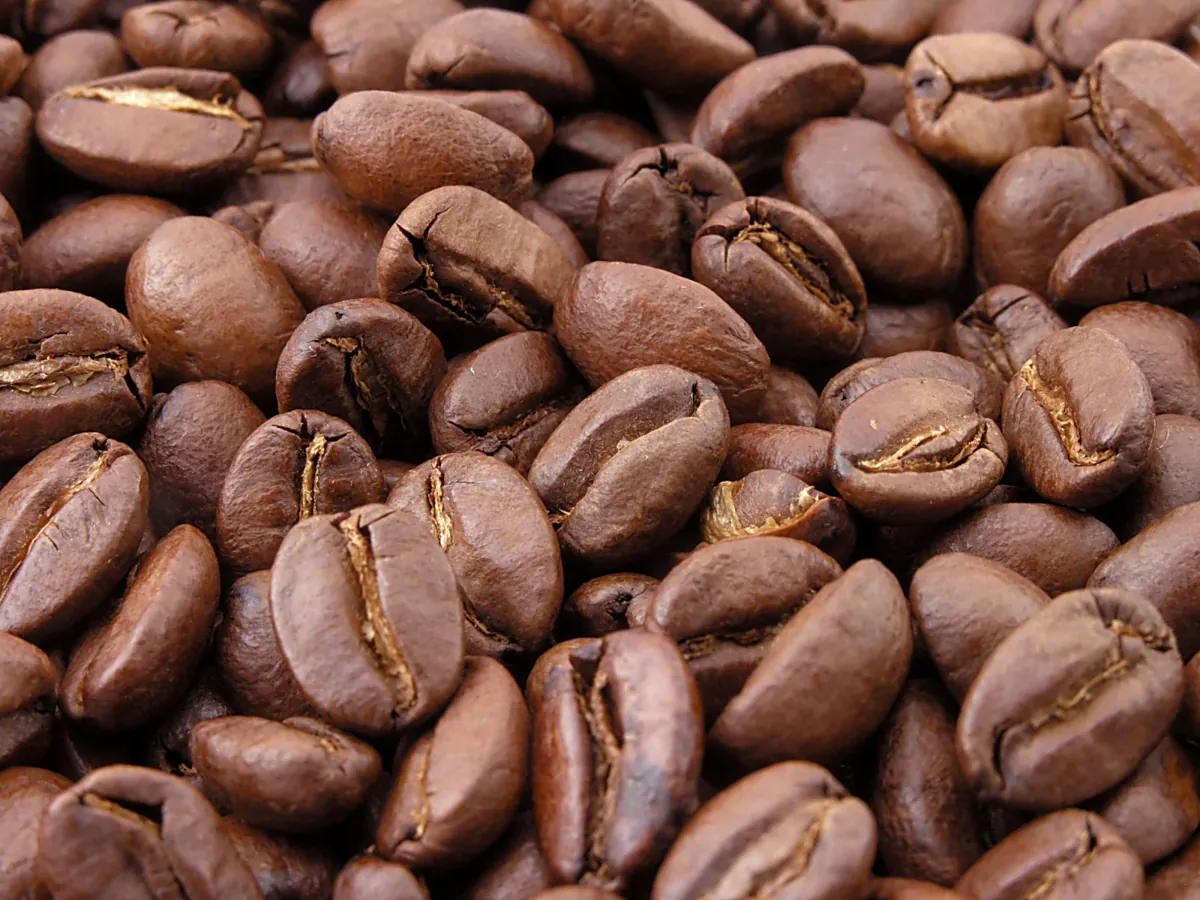
The coffee used in traditional kopitiam kopi is robusta, almost exclusively, sourced primarily from Indonesia and Malaysia. The defining transformation of kopitiam coffee is not the brewing but the roasting: traditional kopi roasters use a large wok and roast green robusta beans with sugar and sometimes with a fat, historically butter or lard, more recently often margarine. The sugar caramelises around the beans during roasting, coating them in a dark, slightly sticky glaze that gives the finished coffee its characteristic flavour profile: intensely bitter, with a sweetness that is part caramel and part condensed milk, a slight charred note, and a thick body that coats the cup.
This roasting technique is distinct from any mainstream Western roasting method. It is closer to the roasting methods historically used in some Middle Eastern and Southeast Asian traditions than to the drum-roasting or fluid-bed systems of commercial coffee roasting. The result is a coffee that would score poorly by specialty cupping standards, because it lacks the clarity, acidity, and origin character that specialty protocols prize. It would also taste completely unlike itself if those characteristics were present. The kopi roast is optimised for the kopi experience, not for scoring at a competition.
The major kopi roasting companies in the region include Nanyang Old Coffee in Singapore (one of the oldest surviving traditional roasters), OldTown White Coffee in Malaysia (now a large chain), and numerous smaller family operations. Many traditional kopi roasters in Singapore have closed over the past two decades as the population of operators who know the technique ages and the next generation has not consistently taken over. The Singapore government's National Environment Agency has documented the decline of traditional kopi roasters as a heritage concern.
Ipoh White Coffee: What It Actually Is
Ipoh, the capital of Perak state in northern Peninsular Malaysia, is one of the most important cities in Malaysian food culture and is particularly celebrated for its white coffee. Ipoh white coffee has become famous enough to be exported globally through brands like OldTown White Coffee, which now sells its products in supermarkets across Asia, Australia, and North America. This export success has created a substantial amount of confusion about what "white coffee" in this context actually means.
Ipoh white coffee is not coffee with milk in the conventional sense. The "white" in Ipoh white coffee refers to the roasting method. Traditional Ipoh kopi is roasted without sugar, using only a small amount of palm oil margarine, producing a lighter-coloured, less caramelised bean than the standard sugar-roasted kopi. The resulting coffee is milder, less bitter, and has a slightly sweeter, nuttier flavour than standard robusta kopi, before any milk is added. It is then typically brewed by the bag method (a sock-like cloth filter) and served with sweetened condensed milk, making the final drink visually pale from the combination of light-roasted coffee and generous condensed milk.
The style originated in Ipoh because the city's large Hainanese Chinese immigrant community, which arrived in large numbers in the early twentieth century to work in the tin mining industry, developed a preference for this less intensely roasted preparation. Ipoh's Old Town, particularly the area around Jalan Yau Tet Shin and the old town coffee shops, remains the most concentrated location for authentic traditional Ipoh white coffee. The shops Foh San, Nam Heong, and Sin Yoon Loong are among those most frequently cited by food writers and local guides as serving the genuine article.
Kopi in Singapore: Heritage, Modernisation, and the Hawker Center
Singapore's relationship with kopi is intertwined with the broader story of the hawker centre, the government-managed outdoor or semi-outdoor food complex that replaced the illegal street food vendors of the 1960s and 1970s through a deliberate resettlement program. Hawker centres now provide the majority of Singaporeans' daily meals and are the primary setting in which kopi is consumed outside the home. In 2020, Singapore's hawker culture was added to UNESCO's Intangible Cultural Heritage of Humanity list, a designation that explicitly includes the kopitiam and kopi tradition as part of the living heritage being recognised.
The kopi uncle or auntie, the typically elderly kopitiam operator who has worked the same counter for decades, is a recognised social figure in Singapore whose continuity is actively discussed as a heritage concern. The National Heritage Board and various community organisations have funded documentation projects, apprenticeship programs, and publicity efforts to encourage younger people to enter the trade. The financial reality is challenging: a kopitiam coffee stall in a Singapore hawker centre requires significant capital investment (the 2023 cost of a licence at a popular hawker centre can reach SGD 150,000 or more for a premium location), operates on thin margins from drinks priced at SGD 1.20 to 2.00, and involves long working hours from pre-dawn setup to mid-afternoon closure.
Modern Coffee in Southeast Asia: The Third Wave Arrives
Alongside the kopitiam tradition, Southeast Asia has developed a vibrant specialty coffee scene over the past decade. Jakarta has become one of the most dynamic specialty coffee cities in Asia, with the Indonesian domestic specialty market growing from nearly nothing in 2010 to a significant industry by 2023. Indonesian producers, growing some of the world's most distinctive coffees including Sumatra Mandheling, Flores Bajawa, and Java Preanger, have begun directing higher-quality lots toward the domestic specialty market rather than exporting exclusively. Bandung, Bali, and Medan have notable specialty roasters and café scenes.
Vietnam's coffee culture, built historically on strong robusta brewed through a traditional phin filter and drunk with sweetened condensed milk in a method parallel to kopi, has also seen significant specialty arabica development, particularly from growing regions in Da Lat and the Central Highlands. Vietnamese egg coffee (cà phê trứng), a preparation of robusta espresso topped with a sweet, creamy beaten egg yolk foam, has attracted international food media attention since approximately 2016 and represents the kind of distinctly local innovation that travels well as a food story.
The Philippines produces arabica coffee in the Cordillera highlands of Luzon and in Benguet province, and a growing domestic specialty scene has established itself in Manila, Cebu, and Davao. The Philippines is also the origin of one of the few significant liberica coffee industries remaining globally. Coffea liberica, the third commercial coffee species, is grown in Batangas province and consumed as "barako" coffee, a strong, thick-bodied, and somewhat smoky coffee with an almost medicinal potency that has its own dedicated domestic market.
The coexistence of the kopitiam tradition, with its sugar-roasted robusta and condensed milk and marble tables, and the modern specialty café, with its single-origin arabica and Aeropress and precise extraction, is not a contradiction in Southeast Asian cities. It is a reflection of urban food cultures sophisticated enough to contain multitudes without demanding that one displace the other. The kopi uncle and the specialty barista operate in the same cities, serve the same populations at different times of day, and represent two genuinely valuable contributions to how human beings have learned to make coffee into something worth drinking.
Related: Vietnamese Coffee: The Phin Filter, Egg Coffee, and Ca Phe Sua Da | Korean Café Culture: Mega-Cafes, Dalgona, and the World's Most Competitive Coffee Market