South Korea is not a country most people associate with coffee when they think of global café culture. It should be. As of 2023, Seoul alone has more than 18,000 cafés, a figure that makes it the most café-dense major city on earth by capita. The country's coffee consumption grew by more than 150% between 2010 and 2023. South Korea now originates café trends that reach London, New York, and Sydney before most Western coffee commentators have noticed them happening. To understand where global café culture is heading, you need to understand Seoul.
The Numbers: A Coffee Market Unlike Any Other
South Korea's café industry is extraordinary in scale. The Korea Customs Service reported that South Korea imported approximately $700 million worth of green coffee beans in 2022, a figure that has grown every year for more than a decade. Per capita coffee consumption reached 367 cups per person per year in 2021, according to data from the International Coffee Organization, placing South Korea among the highest-consuming nations in Asia.
The café count is the most striking statistic. Seoul's 18,000-plus cafés compare with approximately 3,300 coffee shops in London and roughly 4,000 in New York City. Part of this density reflects Korea's urban geography (Seoul is extraordinarily compact and walkable), part reflects the cultural role of cafés as social and professional meeting spaces, and part reflects Korea's unique relationship between consumer culture, aesthetics, and social media documentation.
The Aesthetic Café: Instagram Before Instagram Had a Name
The Korean café aesthetic concept, sometimes called the "concept café" model, predates Western usage of Instagram as a cultural force. The Garosu-gil district in Sinsa-dong (translated loosely as "tree-lined street") became Seoul's original café design destination in the mid-2000s: each café competed on visual identity, interior design, and Instagrammability rather than simply on coffee quality. The Yeonnam-dong neighbourhood followed in the 2010s, with cafés designed as art installations, film sets, and brand identity statements.
This philosophy, that a café should be a designed experience worth photographing and sharing, reached the West through Instagram, K-drama, and K-pop cultural exports. The "white café" aesthetic (exposed concrete, large windows, minimal furniture, handwritten menus in sans-serif type) that appeared across London, New York, and Sydney from 2018 onwards traces its lineage directly to Seoul's café design movements of a decade earlier.
Themed Cafés: A Korean Invention
The concept of themed cafés, while existing in isolated instances elsewhere, was developed into a genuine commercial and cultural institution by Korean café culture. Animal cafés in Korea go far beyond the cat café concept popularised in Taiwan in the 1990s: Seoul has dog cafés, raccoon cafés, owl cafés, hedgehog cafés, and sheep cafés (Cafe Bom Bom in Hongdae is among the most famous). Each operates with distinct rules around animal welfare and visitor interaction.
Beyond animals, Seoul has retro-concept cafés recreating the aesthetics of the 1980s and 1990s (filled with vintage technology, old game cartridges, and period-specific snacks), bookshop cafés (Thanks Books in Hongdae is a widely cited example), hospital-themed cafés, and science laboratory-themed cafés. The dessert café phenomenon, in which the café's primary offering is an architectural dessert item rather than a drink, reached global awareness through Korean social media: the sulbing (shaved ice) and bingsu cafés, as well as the vertical cake slice cafés, are distinctly Korean contributions to global café culture.
Korean Coffee Drink Innovations
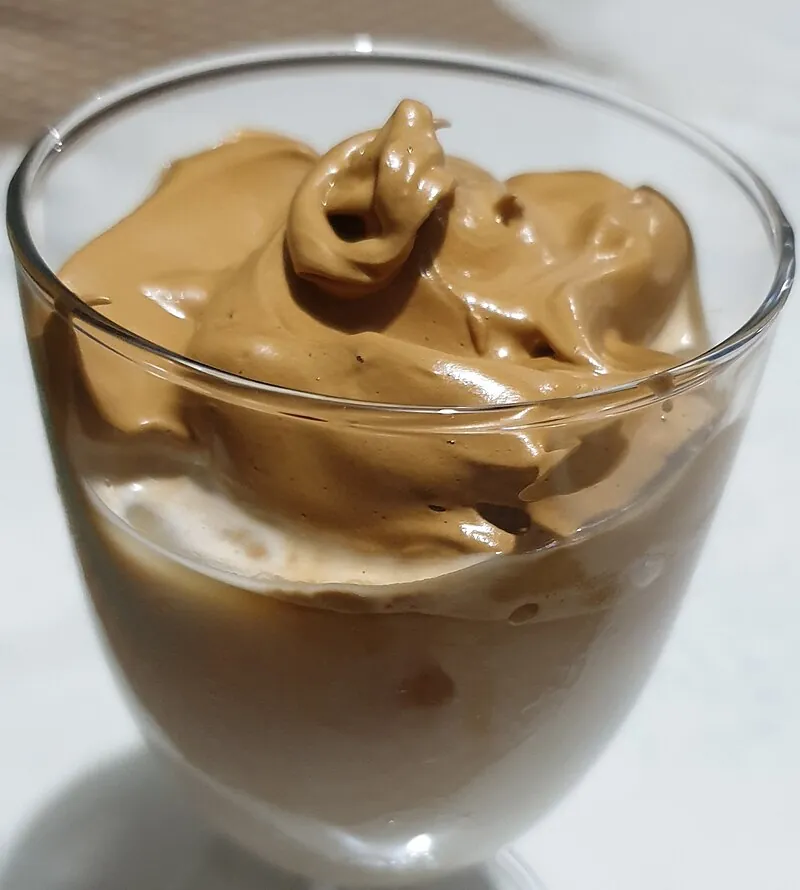
Seoul has originated more globally adopted café drinks in the past decade than any city except perhaps Melbourne. The clearest example is Dalgona coffee. Made by whipping equal parts instant coffee, sugar, and hot water into a stiff foam that floats on top of iced or hot milk, Dalgona went from a Korean café staple to a global lockdown-era phenomenon in early 2020, when a clip of actor Jung Il-woo tasting it in Macau spread across Korean social media and from there to TikTok and Instagram. Google Trends registered "Dalgona coffee" reaching global peak search volume in April 2020.
The iced Einspänner deserves equal attention. The original Einspänner is a Viennese coffee drink (a double espresso in a glass topped with whipped cream, meant to be stirred in and drunk). Korean cafés adapted it as an iced drink with a heavy cream float, often sweetened and served in a glass that emphasises the visual contrast between the dark coffee and the white cream layer. This Korean interpretation spread to specialty cafés in London, New York, and Sydney between 2022 and 2024, often branded as a "cream coffee" with no acknowledgement of its Seoul origins.
Bingsu coffee, shaved milk ice topped with espresso and various toppings including red bean, mochi, and condensed milk, is another Korean contribution to global café menus. Patbingsu (red bean shaved ice) is a Korean traditional dessert; the coffee adaptation dates to the 2010s Seoul café scene and has since spread to Korean-owned cafés across Southeast Asia, North America, and Europe.
The Specialty Coffee Scene: Seoul's Third Wave
Behind the aesthetic cafés, Seoul has a serious and growing specialty coffee scene that operates to global competition standards. Anthracite Coffee (with flagship cafés in Hapjeong, Itaewon, and Jeju Island) is Korea's most internationally recognised specialty roaster. The Hapjeong café occupies a former jeans factory: the industrial heritage of the building has been preserved, with the roastery operating in full view of café guests. Anthracite sources from multiple origins and publishes detailed tasting notes for each lot.
Fritz Coffee Company, based in Mapo-gu, is widely considered to have the most rigorous sourcing standards of any Korean specialty roaster. Fritz publishes farm-gate prices alongside retail prices for its beans, a level of transparency that matches the best Nordic specialty roasters. The café itself, designed to resemble a modernist community building, has a distinct neighbourhood identity that contrasts with the more fashion-conscious cafés of Gangnam and Hongdae.
Momos Coffee, based in Gyeonggi-do (just outside Seoul), was founded by former World Barista Championship competitors and operates with competition-grade equipment and technique. Café Bora in Insadong is famous for its purple charcoal soft-serve ice cream and matcha lattes, a reminder that aesthetic innovation and quality need not be mutually exclusive.
Commercial Chains: Korea's Own Coffee Giants
Starbucks is present throughout South Korea but is not the market leader in unit count. That position belongs to Korean domestic chains. Mega Coffee, founded in 2015, has expanded to more than 2,500 locations in Korea by offering specialty-adjacent quality at lower prices (most drinks priced at 2,500–3,500 KRW, or approximately $1.90–$2.70). Ediya Coffee has more than 3,000 locations. Both chains have outpaced Starbucks in Korea by combining the accessible pricing of fast food coffee with the aesthetic identity of specialty cafés.
The Paul Bassett chain, operated under licence from Australian World Barista Champion Paul Bassett, is a mid-market Korean chain that has brought genuine specialty technique to a commercial-scale operation, occupying a space between independent specialty and fast chain that is relatively rare in Western markets.
The Export of Korean Café Culture
From 2022 onwards, Korean-style cafés have opened in major cities globally. In London, Cafe Bora, O.bora, and several unnamed but recognisably Korean-aesthetic independent cafés have opened in Soho and Shoreditch. In New York, the K-café aesthetic has become a distinct subset of the specialty café market in Manhattan and Flushing. In Sydney and Melbourne, Korean-born café operators have brought the design vocabulary and drink menu of Seoul to the Australian specialty scene. The trend shows no sign of slowing: Seoul's influence on global café culture in 2025 is the equivalent of Melbourne's influence in 2010.
Related: The World's Best Cities for Coffee in 2025 | Dalgona Coffee Guide: How to Make the Whipped Coffee Sensation