The confusion about coffee roast levels has two sources: the labels themselves are not standardised (one roaster's "medium" is another's "dark"), and the most common assumption about roast levels (that darker roast equals stronger coffee) is incorrect in the way most people understand it. Roast level affects flavour profile profoundly, affects caffeine content marginally, and affects the type of flavour compounds present in the cup far more than the "strength" of the brew. Understanding roast level is the single most useful piece of knowledge for selecting a coffee that will produce what you actually want to drink.
What Happens During Roasting
Green coffee beans contain approximately 300 flavour precursor compounds, mostly in the form of sugars, amino acids, and organic acids. During roasting, the application of heat (roasting temperatures reach 200 to 230°C inside the drum, though bean surface temperature is lower) drives a cascade of chemical reactions:
- Drying phase (until approximately 160°C internal bean temperature): Moisture evaporates (green beans are 8% to 12% moisture; roasted beans 1% to 3%). The bean turns from green to yellow, then tan.
- Maillard reaction (from approximately 150°C): Amino acids and reducing sugars react to form hundreds of new compounds including melanoidins (responsible for brown colour), pyrazines (nutty, earthy notes), furans (caramel notes), and thousands of volatile aromatic molecules. This is the same reaction that browns bread and seared meat.
- First crack (approximately 196 to 205°C): Steam pressure inside the bean causes it to expand and crack audibly. This marks the beginning of a light roast; the coffee is now drinkable. The bean volume increases by 50% to 100% from green coffee size.
- Development phase: Between first crack and second crack, the roaster develops the flavour profile. Short development time (20 to 30 seconds) produces a light roast; longer development produces medium roast.
- Second crack (approximately 224 to 230°C): The cell structure of the bean fractures more completely, releasing oils to the surface. Entering or exiting second crack defines dark roast territory. Oils become visible on the bean surface.
Roast Levels: What Each Means in Practice
Light Roast
Internal bean temperature at drop: 196 to 210°C (just after or slightly into first crack)
Bean appearance: Light brown, matte surface, no oil visible
Common names: Light roast, Blonde (Starbucks), Cinnamon roast, Half-City roast
Light roasts retain the most of the original coffee's terroir (the flavour characteristics derived from the farm's soil, altitude, variety, and processing method). A light roast from an Ethiopian natural process coffee will taste fruity and floral; a light roast from a Kenyan washed coffee will taste bright and acidic with berry and citrus notes. These characteristics are not "added" by the roaster; they were present in the green bean and preserved by the shorter roasting time. Light roasts are the choice of specialty coffee shops and third-wave roasters precisely because they showcase the origin coffee's character.
Light roasts have slightly higher caffeine than dark roasts by weight (caffeine begins degrading above 200°C; the difference is approximately 5%, which is negligible in practice). They have higher acidity than darker roasts. They require a slightly finer grind and longer extraction time than the same coffee at a darker roast level.
Medium Roast
Internal bean temperature at drop: 210 to 220°C (fully through first crack, before second crack)
Bean appearance: Medium brown, matte to very slightly oily surface
Common names: Medium roast, City roast, City+ roast, Full City (approaching dark)
Medium roasts balance origin characteristics with roast-developed flavour. The Maillard reaction has produced more brown-sugary, nutty, and caramel compounds that complement rather than overpower the underlying coffee character. Most commercial "specialty" blends intended for espresso use medium roast profiles because they produce consistent results across extraction variables and work well with milk. Supermarket "premium" coffees (Lavazza Qualità Rossa, Illy classico, most branded arabica blends) are medium to medium-dark roasts. This is the most versatile roast level for multiple brewing methods.
Dark Roast
Internal bean temperature at drop: 220 to 230°C (approaching or entering second crack)
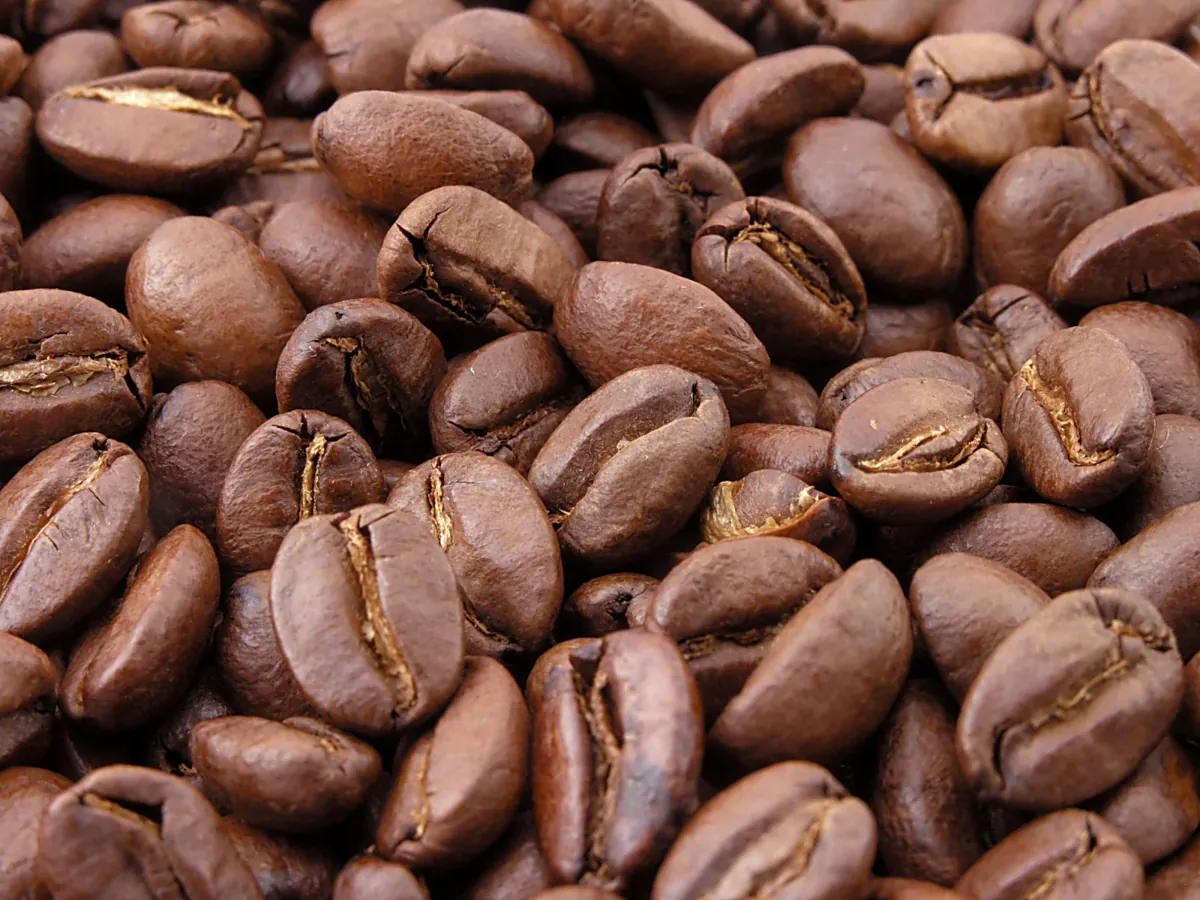
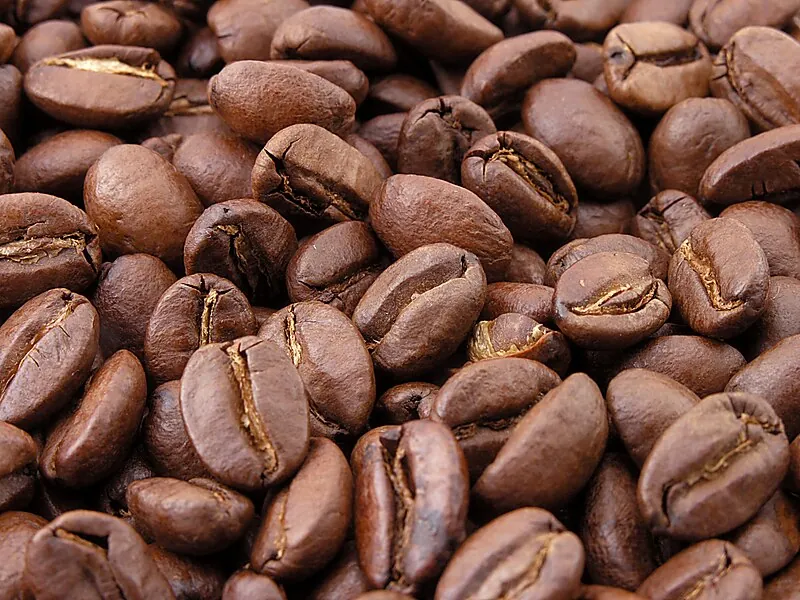
Bean appearance: Dark brown to near-black; oily or very oily surface
Common names: Dark roast, French roast, Italian roast, Vienna roast, Espresso roast
Dark roasts have undergone significant sugar caramelisation and pyrolysis (thermal decomposition of organic compounds at high heat), producing smoky, chocolatey, and bitter flavour compounds that dominate or completely obscure the original bean's character. The acidity of the original green coffee has been degraded; dark roasts taste less acidic and more bitter. The common belief that dark roast is stronger in caffeine is incorrect: the lower caffeine degradation from lighter roasting means light roast actually has marginally more caffeine by weight. Dark roast has lower density (more moisture and CO2 driven off), meaning a scoop of dark roast coffee has fewer grams than the same scoop of light roast; if measured by volume rather than weight, this can produce a stronger brew, which may be the origin of the misconception.
Italian espresso tradition has historically used dark or very dark roasted robusta-dominant blends (Illy, Lavazza, Kimbo) for espresso; the bitterness was considered a quality characteristic and the lower acidity was preferred. Third-wave specialty coffee has challenged this with lighter espresso roasts that preserve origin character; both approaches are legitimate, producing fundamentally different cup profiles.
Which Roast for Which Brewing Method
| Brewing Method | Recommended Roast | Why |
|---|---|---|
| Pour over / V60 | Light to medium | High extraction clarity showcases light roast's origin complexity |
| French press | Medium to medium-dark | Full immersion and oil retention suits medium roast body and chocolate notes |
| Espresso machine | Medium to dark | High pressure extraction requires less soluble coffee (dark roast degasses more, provides cushion for timing) |
| Moka pot | Medium-dark to dark | High extraction ratio and small volume suits dark roast's stronger flavour development |
| Cold brew | Medium to dark | Cold extraction reduces acidity anyway; medium-dark roast's chocolate notes translate well |
| Aeropress | Any roast level | Versatile method; adjust recipe parameters to suit the roast level used |
Related: Pour Over Guide: The Best Method for a Single Cup | How to Make Cold Brew Coffee at Home