There are coffee brewing methods that are faster, cheaper, and less theatrical than the siphon. There are very few that produce a cup of comparable clarity and sweetness. The siphon coffee maker (also called a vacuum pot or vac pot) has been in continuous use for nearly two centuries, is standard equipment in traditional Japanese coffee shops, and requires the kind of focused attention that most modern brewing methods have specifically engineered away. That combination of science, spectacle, and reward makes it one of the most compelling home brewing methods available, and one of the most underappreciated.
The History: Germany, France, and Victorian Drawing Rooms
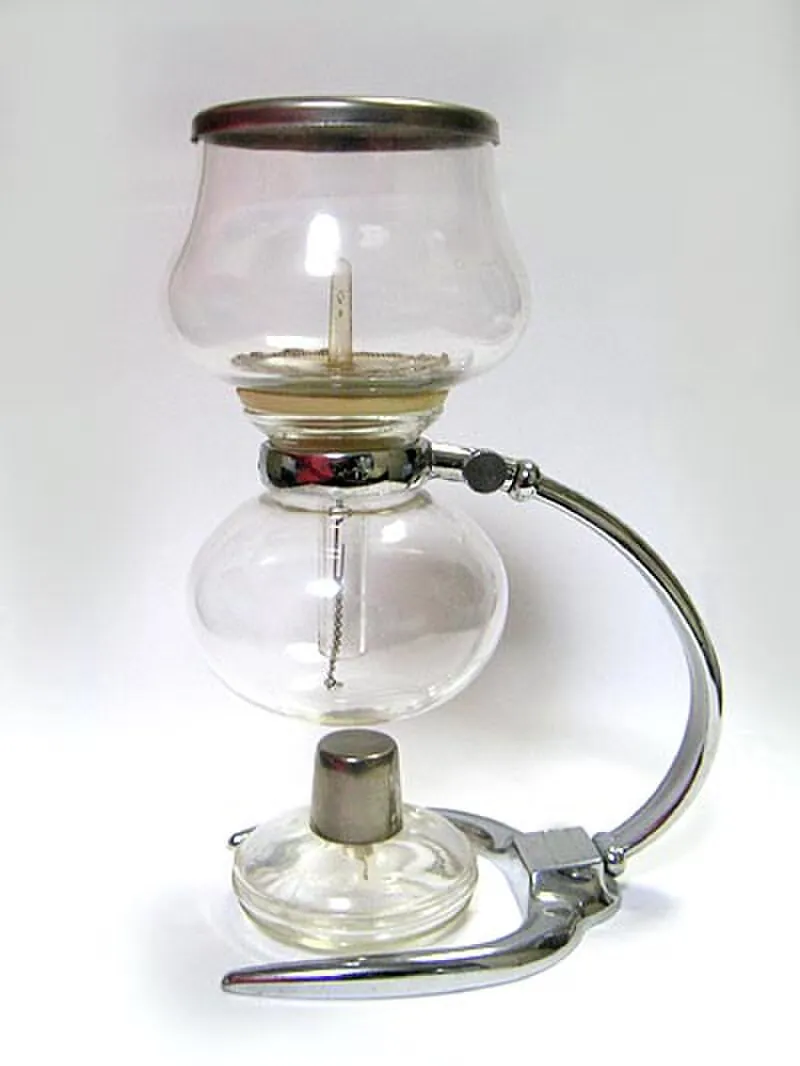
The siphon coffee maker was invented independently in two countries within a decade of each other. The first documented design came from Loeff of Berlin in the 1830s, though the patent and commercial documentation from this period is incomplete. The French inventor most associated with the siphon is Mme. Jeanne Richard Vassieux of Lyon, who patented a two-chamber glass vacuum coffee maker in 1841. The Vassieux design, which featured a glass globe lower chamber and an upper brewing vessel separated by a filter, is recognisably similar to the siphon makers sold today.
In Britain, the Napier Vacuum Machine (patented by Robert Napier in 1840) was marketed as a domestic appliance for middle-class households. By the 1850s, vacuum coffee makers were sold across Europe and the United States as a premium alternative to simple percolation. The Silex Company in the United States made glass vacuum pots widely available in the 1910s and 1920s, and they appeared in diners and homes through the mid-20th century before the drip machine made them obsolete for mass use.
Japan took a different path. The siphon arrived in Japan in the early 20th century and was adopted enthusiastically by the kissaten culture. In the Japanese kissaten (traditional coffee shop), the siphon became the signature brewing method, associated with craft, patience, and precision. It has remained standard equipment in traditional kissaten ever since.
How It Works: Vapour Pressure and Vacuum
The siphon uses basic physics to brew coffee. The device consists of two glass chambers connected by a tube with a filter at the bottom of the upper chamber. Water is placed in the lower chamber and the coffee grounds are placed in the upper chamber. When the lower chamber is heated, water vapour builds up pressure that forces the hot water up through the tube and into the upper chamber, where it is immersed with the coffee grounds and begins extracting. The temperature in the upper chamber during extraction is typically 90–96°C, stabilised by the physics of the system.
When the heat source is removed, the lower chamber begins to cool. The steam inside condenses, reducing pressure and creating a partial vacuum. This vacuum draws the brewed coffee back down through the filter and tube into the lower chamber, leaving the spent grounds behind in the upper vessel. The result: a clear, filtered cup in the lower chamber, ready to pour.
The key advantage of this mechanism over most other brew methods is temperature stability. Unlike a pour-over, where water temperature drops as you pour, or a French press, where the water begins cooling immediately at contact, the siphon's upper chamber maintains a consistent elevated temperature throughout the entire steep. This produces even, reproducible extraction.
Why the Cup Quality Is Exceptional
Several factors combine to make siphon-brewed coffee stand out. The first is the full immersion brewing method: unlike a pour-over where water passes through grounds once, the siphon allows full immersion for the duration of the steep, similar to a French press or cupping. Full immersion tends to produce more even extraction across the coffee bed.
The second factor is the filter. Most siphon users prefer a cloth filter (flannel or cotton) over a paper filter, because cloth removes the fine particles and sediment that cause bitterness while retaining the coffee oils that carry body and flavour. The cloth filter produces a cup that is cleaner than a French press (no sediment) but fuller-bodied than a paper filter pour-over (oils retained). It is a specific textural quality that is difficult to replicate with any other method.
The third factor is temperature stability during extraction. A consistent 92–94°C throughout a 60–90 second steep produces more even extraction of flavour compounds than the temperature gradients that occur in pour-over or drip methods. The result is a cup with both clarity of flavour and depth of body, without the muddiness of French press or the sharpness of espresso.
Equipment: Hario, Yama, and the Spirit Burner
The two dominant manufacturers of siphon coffee makers are Hario (Japan) and Yama (also Japan, sold widely in the US and Europe). The Hario TCA-5 (5-cup model) is the most commonly recommended entry-level siphon, available for approximately £35–50 in the UK and $50–70 in the US. Yama's glass siphons are priced similarly, with the 5-cup model around $45–60. Both are all-glass construction with metal frames and come with a cloth or metal filter.
The heat source matters significantly. A butane spirit burner (included with most siphons) produces a consistent, controllable flame and is the traditional choice. A halogen beam heater, used in many Japanese kissaten and specialty cafés, provides extremely precise temperature control and no combustion products near the coffee. Halogen heaters for home siphon use cost approximately $80–150. Some home users place the siphon over a gas hob with a heat diffuser, which works but is harder to control precisely.
Replacement cloth filters cost roughly £5–8 for a pack of five and should be replaced every 30–50 brews, or when they develop a strong coffee odour that does not wash out. After each use, rinse the cloth filter in cold water without soap, and store it submerged in water in the refrigerator to prevent oils from going rancid.
The Correct Technique
Getting a consistent siphon brew requires more attention than pressing a drip machine button, but it is not technically difficult once you understand the sequence.
- Grind: Medium-fine, slightly coarser than pour-over. For a 5-cup Hario TCA-5, use approximately 25–30g of coffee to 350ml of water (a 1:12 to 1:14 ratio).
- Preheat: Fill the lower chamber with hot (not boiling) water before beginning. This reduces the time needed to force water to the upper chamber and reduces thermal shock to the glass.
- Assemble: Attach the upper chamber to the lower, ensuring the cloth filter is seated correctly over the tube opening. Apply heat.
- Water rises: Within 1–2 minutes the water will rise to the upper chamber. A small amount will remain in the lower chamber during brewing.
- Add coffee and stir: Once the water has mostly risen, add the ground coffee and stir gently to ensure all grounds are saturated. Begin timing immediately.
- Steep: Allow the coffee to steep for 60–90 seconds, stirring once at 45 seconds to keep the grounds immersed evenly.
- Remove heat: Exactly at the target steep time, remove the heat source completely. The coffee will begin to draw down within 30 seconds. The draw-down itself should take 30–45 seconds if the grind is correct.
- Remove upper chamber and serve: Once all the coffee has drawn down, twist and remove the upper chamber. Pour immediately from the lower chamber.
The Third-Wave Revival
The siphon's US specialty coffee revival was largely driven by Intelligentsia Coffee and Blue Bottle Coffee in the mid-2000s. Both companies offered siphon brewing on their café menus as a premium, slow-bar option, typically priced $8–12 per serving and prepared tableside. The visual spectacle, the laboratory aesthetic, and the flavour quality converted many customers who had never seen the method before.
YouTube has been a second driver of the home siphon renaissance. The brewing process photographs and films beautifully, and the combination of science and craft appeals to the home barista community that has grown substantially since 2015. Japanese home brewing channels in particular have produced detailed siphon tutorials that have introduced the method to international audiences who might never have encountered it in a café.
The siphon will never be the most convenient home brew method. It requires active attention for seven minutes, produces relatively small quantities per batch, and involves fragile glass equipment that breaks if handled carelessly. But for the coffee drinker who wants to slow down and engage with the process, it produces a cup that genuinely justifies the effort.
Related: AeroPress vs Pour-Over: Which Is Right for You? | Japanese Coffee Culture and the Kissaten Explained