Coffee is one of the most traded agricultural commodities on Earth, yet few consumers know much about the plant that produces it. The coffee plant belongs to the genus Coffea, within the family Rubiaceae, a large family that also includes gardenias and quinine-producing cinchona trees. Of the roughly 130 known Coffea species, only two dominate commercial production: Coffea arabica and Coffea canephora (commonly known as robusta). Their genetic differences, growing requirements, and flavour profiles determine almost everything about the coffee in your cup.
The Coffea Genus and Family
The Rubiaceae family contains around 13,000 species of flowering plants, mostly tropical shrubs and trees. Within this family, the genus Coffea is native to sub-Saharan Africa and the island of Madagascar. The plant was first described scientifically by Antoine de Jussieu in 1742 based on specimens brought from Yemen, where the species had been cultivated since at least the fifteenth century.
Wild coffee species range from small shrubs to trees reaching 10 metres in height. Commercial coffee is almost always kept pruned to between 1.5 and 3 metres for ease of picking. The leaves are dark green, glossy, and elliptical. The white flowers are self-pollinating in arabica (a key fact for its genetics) and cross-pollinating in robusta. Both species are woody perennials with commercial lifespans of 20 to 30 years, though some trees in Ethiopia and Yemen are known to be over a century old and still productive.
Coffea arabica: The Quality Standard
Coffea arabica is a tetraploid species, meaning it carries four sets of chromosomes (2n = 44) rather than the diploid two sets found in most Coffea species. Genetic analysis suggests it originated as a natural hybrid between C. canephora and C. eugenioides in the highlands of Ethiopia, probably in the Kaffa region, where wild arabica plants still grow in montane forest. This hybrid origin, which occurred naturally rather than through human breeding, is likely why arabica has such complex, diverse flavour chemistry.
Arabica is self-fertile: its flowers can pollinate themselves without cross-pollination from another plant. This characteristic accelerates selective breeding (a new trait can be fixed in a population faster) but also limits genetic diversity. Cultivated arabica populations are genetically narrow, which makes the species particularly vulnerable to diseases such as coffee leaf rust (Hemileia vastatrix) and coffee wilt disease (Fusarium xylarioides).
Arabica accounts for approximately 60–70% of global coffee production by volume, though exact figures shift with harvest seasons. It commands higher prices on commodity markets: as of 2024, arabica futures traded on the Intercontinental Exchange (ICE) typically at a premium of 20–40% over robusta futures on the London International Financial Futures Exchange (LIFFE). Arabica's caffeine content averages 1.2–1.5% by dry weight of the green bean.
Coffea canephora (Robusta): Hardy and High-Caffeine
Coffea canephora, the species that produces robusta beans, is a diploid (2n = 22) and is native to lowland tropical Africa, primarily the Congo Basin and Uganda. Unlike arabica, it requires cross-pollination between different plants to set fruit. This encourages greater genetic diversity and gives the species more natural resilience against diseases and pests, but it also makes varietal development more complex.
The caffeine content of robusta beans averages 2.2–2.7% by dry weight, roughly double that of arabica. Caffeine functions as a natural pesticide in the plant, deterring insects that might damage the seeds. This higher caffeine concentration likely explains why robusta plants can be grown at lower altitudes and in hotter, wetter conditions where insect pressure is greater. Robusta is grown predominantly in Vietnam (the world's largest robusta producer), Uganda, Ivory Coast, and Indonesia.
In cup, robusta typically produces a heavier body, lower acidity, and flavours described as earthy, woody, or rubbery at lower qualities, or chocolatey and nutty at high quality. Specialty robusta from Uganda or India can be genuinely complex and is increasingly used by specialty roasters as a single origin. More commonly, robusta is blended into Italian-style espresso blends where its body and dense crema are valued, and it forms the base of most commercial instant coffee due to its higher yield of soluble solids during extraction.
Key Arabica Varietals
Within C. arabica, dozens of named varietals exist, varying in plant size, bean density, yield, disease resistance, and most importantly, flavour. These are analogous to grape varietals in wine.
Typica
Typica is the original arabica varietal, the genetic ancestor of most Latin American and Asian cultivated arabica. It was carried from Yemen to India by Baba Budan in the early seventeenth century and from there to the Amsterdam Botanical Garden, then onward through Dutch and French colonial networks to the Americas. Typica produces low yields but exceptional cup quality. Jamaica Blue Mountain, one of the world's most expensive coffees (retailing at £50–80 per 250g), is a Typica selection.
Bourbon
Bourbon is a mutation of Typica that emerged on the island of Réunion (then called Bourbon) after French missionaries planted trees there in the early 1700s. It produces higher yields than Typica and is prized for its sweetness. Bourbon is found widely in Rwanda, Burundi, and Latin America. Red, Yellow, and Pink Bourbon are colour variants with slightly different flavour profiles.
Caturra
Caturra is a natural dwarf mutation of Bourbon, first discovered in Brazil around 1915. Its compact size allows for much higher planting densities (up to 10,000 trees per hectare) compared with Typica (2,500–3,000 per hectare). It became Colombia's dominant commercial varietal for several decades before being partially displaced by disease-resistant hybrids. Caturra is susceptible to leaf rust.
Gesha (Geisha)
Gesha originated in the Gori Gesha forest of Ethiopia's Bench-Sheko zone. Brought to the Centro Agronómico Tropical de Investigación y Enseñanza (CATIE) in Costa Rica in the 1950s and later planted at Hacienda La Esmeralda in Panama's Chiriquí highlands, it became internationally famous after winning the Best of Panama auction in 2004. That year it sold for $21 per pound, a record at the time. By 2022, exceptional Gesha lots from Panama were selling at auction for over $2,000 per pound. The varietal produces distinctive jasmine and bergamot aromatics, a delicate tea-like body, and complex tropical fruit flavours.
SL28 and SL34
The SL varietals were developed by Scott Laboratories (hence "SL") in Kenya during the 1930s and 1940s. SL28 was selected for drought tolerance and superior cup quality; it produces the blackcurrant, tomato, and phosphoric acidity that define classic Kenyan coffee. SL34 was selected for high-altitude performance and rainfall tolerance. Both varietals are susceptible to leaf rust but are retained in Kenya for their exceptional flavour, unlike in other countries where disease-resistant hybrids have displaced older varietals.
Altitude and Its Effect on the Bean
Altitude is the single most important environmental variable in arabica quality. At high altitudes, lower temperatures slow the rate of cherry development. A cherry that takes 9 months at 1,500 metres might take only 6–7 months at 800 metres. The longer, cooler development period allows the bean to accumulate more complex sugars, organic acids (citric, malic, tartaric), and aromatic precursors. The result is a denser, more complex bean.
Bean density is a measurable proxy for quality. Specialty green coffee buyers use density measurement (typically 600–700 grams per litre for high-quality arabica) as a sorting criterion. Denser beans roast more evenly and develop more Maillard reaction products, contributing to complex flavour and aroma.
The relationship between altitude and quality is captured in many origin classification systems. Ethiopian Yirgacheffe is grown at 1,700–2,200 metres and is among the world's most celebrated origins. Colombian Supremo from the Nariño department (1,800–2,300 metres, some of the highest coffee-growing land in the country) commands a consistent premium. In contrast, lower-altitude robusta growing regions in Vietnam (200–800 metres) produce beans that, while reliable and high-yielding, lack the aromatic complexity of high-altitude arabica.
The Coffee Cherry: Anatomy of a Fruit
Understanding the cherry's structure helps explain why processing methods affect flavour so dramatically.
- Exocarp (skin): The outer red, yellow, or orange skin. Removed mechanically in wet processing, or dried intact in natural (dry) processing.
- Mesocarp (mucilage): A layer of sweet, sticky fruit flesh immediately beneath the skin. It contains significant quantities of sucrose, citric acid, and other flavour-active compounds. In honey-processed coffees, some or all of the mucilage is left on the bean during drying, contributing sweetness and body to the final cup.
- Endocarp (parchment): A papery, beige husk that encloses the seed. It protects the bean during fermentation and drying and is removed at the dry mill before export.
- Spermoderm (silver skin): A very thin membrane covering the seed. Most of it is removed during roasting as "chaff."
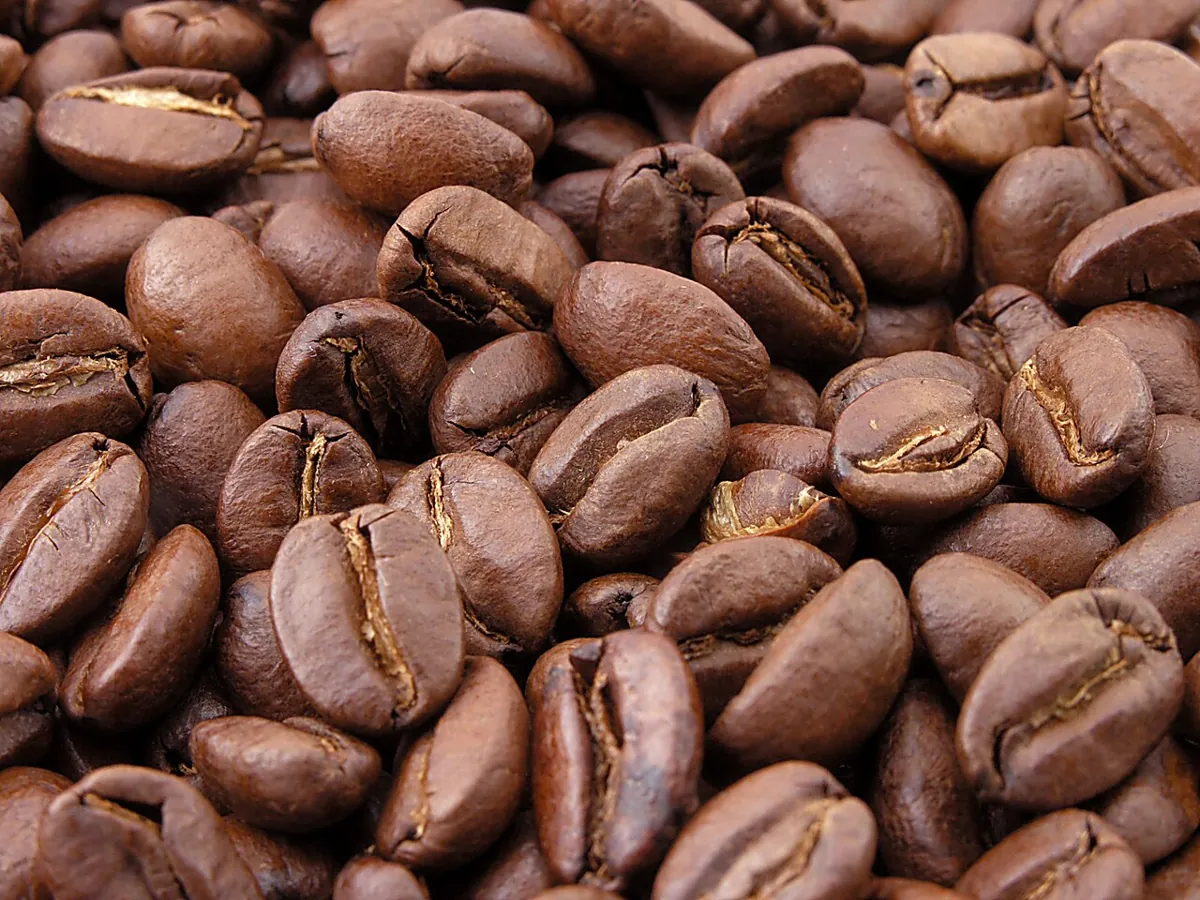
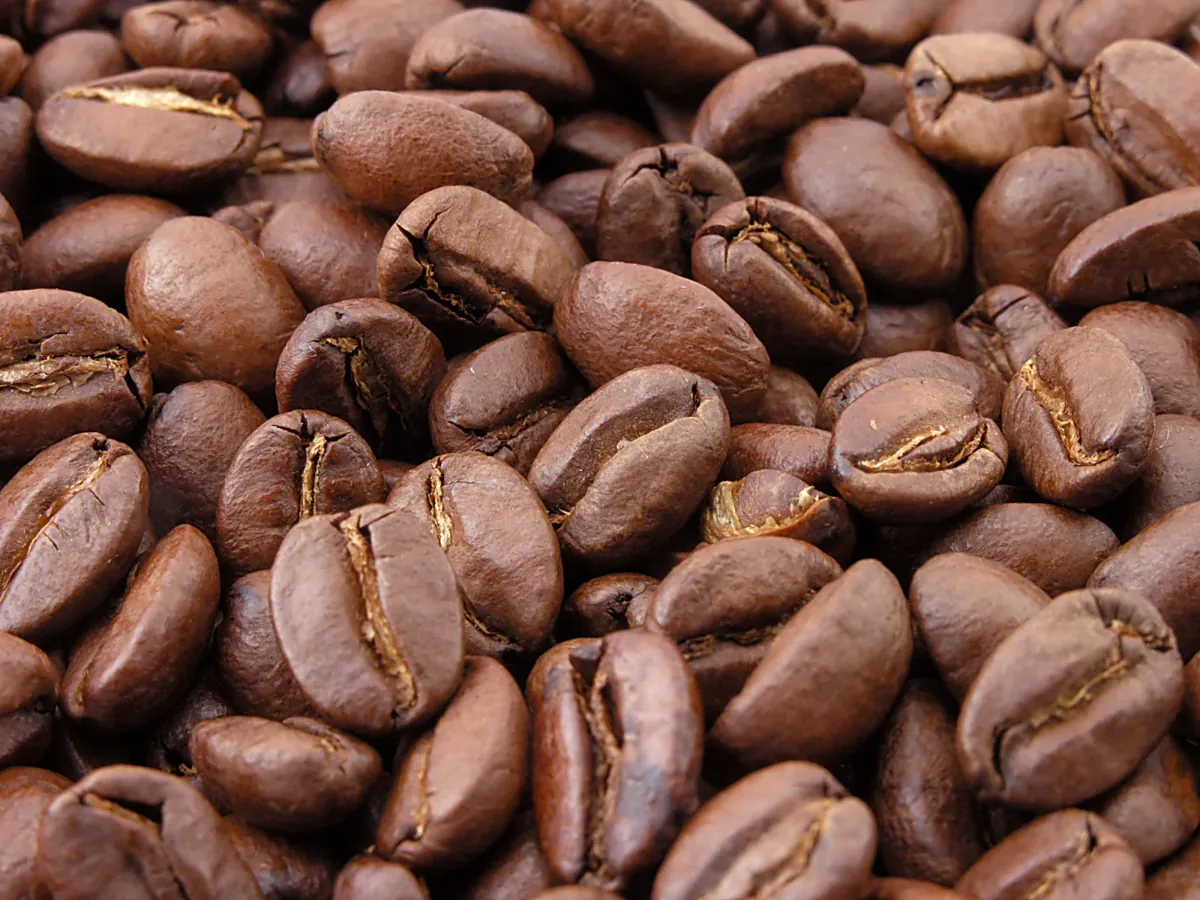
- Seed (the coffee bean): The commercial product. Two seeds sit face-to-face in each cherry, their flat sides touching, with a longitudinal groove (the centre cut) on each flat face.
Defect Grading
Green coffee quality is assessed partly through defect counting. The Specialty Coffee Association (SCA) defines specialty grade as having zero Category 1 defects (full blacks, full sours, pods, large stones, large sticks, mould) and no more than five Category 2 defects per 350-gram sample. The Brazilian Coffee Industry Association (ABIC) uses its own system, and the International Coffee Organization (ICO) maintains separate grading standards for trade classifications.
Common defects include black beans (over-fermented or diseased seeds), sour beans (under-fermented, vinegary in cup), quakers (underdeveloped seeds that remain pale after roasting), and floaters (low-density beans that produce weak, hollow flavours). Understanding defect types and their causes is fundamental to green coffee buying and to understanding why cup quality varies so dramatically across price points and origins.
Related: Inside a Coffee Plantation: How Coffee Grows from Seed to Harvest | Coffee Roast Levels Explained: Light, Medium, and Dark