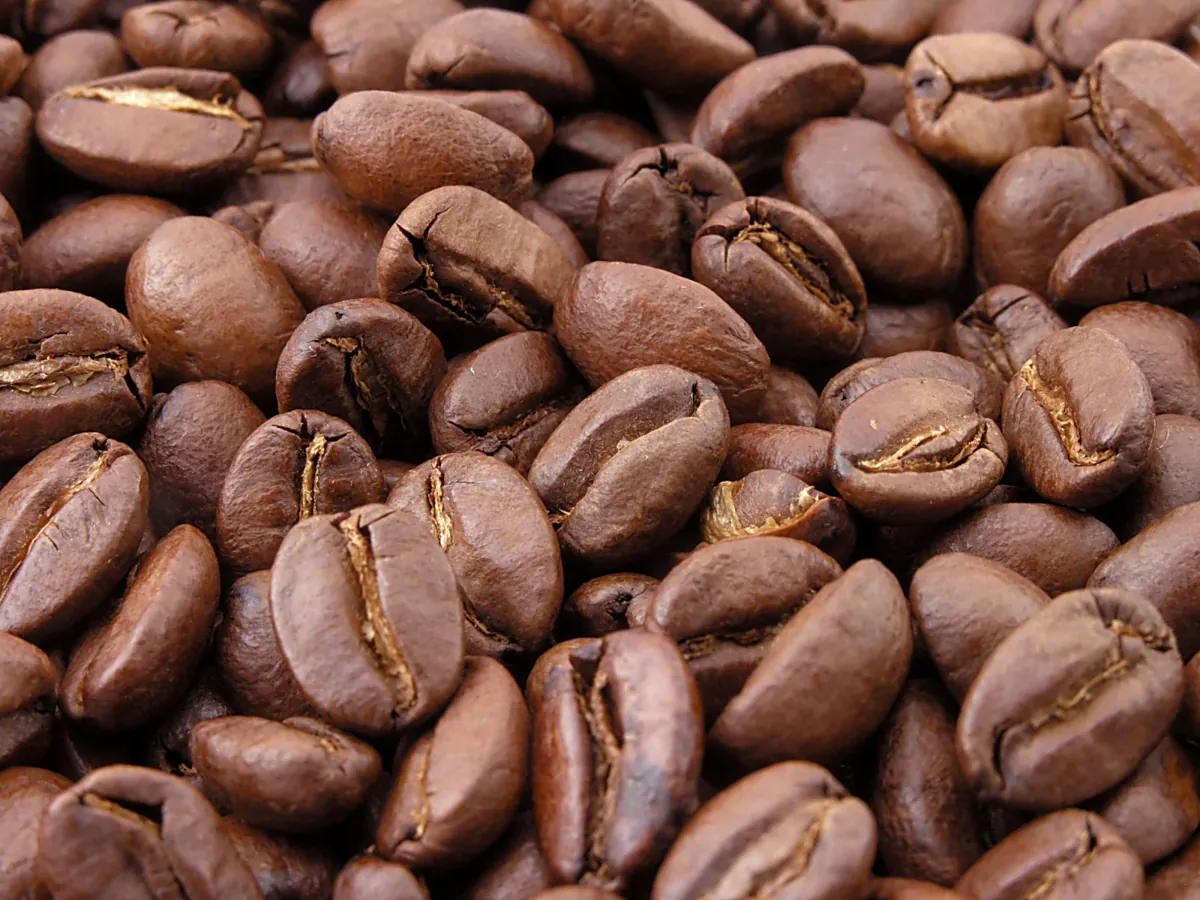
In 2023, Canadians consumed approximately 8 cups of Tim Hortons coffee for every 1 cup from any competitor, according to the brand's own market research cited in its parent company Restaurant Brands International's annual filings. There are more than 4,000 Tim Hortons locations in Canada alone, roughly one for every 9,200 Canadians, a density that exceeds McDonald's in Canada and rivals 7-Eleven in Japan. Internationally, Tim Hortons operates in the United States, the United Kingdom, the Philippines, Saudi Arabia, China, India, Spain, and more than a dozen other countries, with a total global location count exceeding 5,700 as of 2024. No other coffee chain in the world occupies the specific cultural position that Tim Hortons holds in its home country: less a brand than a national ritual, less a product than an identity marker, referenced in political speeches, sports commentary, immigration stories, and every honest account of what it feels like to arrive in Canada in winter and warm your hands on a paper cup.
The Founding: A Hockey Player and a Donut Shop
Tim Hortons the person was Miles Gilbert "Tim" Horton, a defenseman who played 24 seasons in the National Hockey League (NHL), primarily with the Toronto Maple Leafs. He was born in Cochrane, Ontario, on January 12, 1930, and was regarded as one of the most physically powerful defenders of his era. He was also a businessman, and in 1964 he partnered with Ron Joyce, a former police officer from Hamilton, Ontario, to open the first Tim Hortons location at 65 Ottawa Street North in Hamilton, Ontario. The original menu was simple: coffee and two types of donuts. The name used the hockey player's own, with the apostrophe eventually dropped from corporate branding (making it "Tim Hortons" rather than "Tim Horton's") in a trademark simplification.
Tim Horton died on February 21, 1974, in a single-vehicle accident on the Queen Elizabeth Way near St. Catharines, Ontario, driving a De Tomaso Pantera he had received as compensation. He was 44. At the time of his death, there were approximately 40 Tim Hortons locations. Ron Joyce bought out Horton's share from his widow for $1 million and proceeded to build the chain into a national institution over the following two decades. Joyce sold the chain to Wendy's International in 1995 for approximately CAD 600 million. In 2006, Tim Hortons was spun off as a public company on the Toronto Stock Exchange. In 2014, the Brazilian private equity firm 3G Capital (which controls Burger King's parent company) acquired Tim Hortons and merged it with Burger King to form Restaurant Brands International (RBI), which also owns Popeyes. RBI is incorporated in Canada and headquartered in Toronto.
The Double-Double: Canada's Coffee Order
The double-double is the most distinctively Canadian coffee order in existence: a medium Tim Hortons coffee with two creams and two sugars. The term entered Canadian English so thoroughly that by 2004, the word "double-double" was added to the Canadian Oxford Dictionary, one of very few branded product usages to achieve dictionary inclusion. The double-double defines a specific ratio: two portions of the chain's standard cream (approximately 18 percent milk fat creamer) and two portions of white sugar, mixed into their standard medium drip coffee.
Tim Hortons' coffee itself has been a point of considerable national debate. The chain historically blended and roasted its coffee at the dark end of medium-dark, producing a consistent, smooth, low-acid product that was always brewed fresh (the chain maintains strict freshness standards: brewed coffee is discarded after 20 minutes and a fresh pot is started). This consistency across thousands of locations, not any exceptional quality claim, is the product's core value. It tastes the same in Whitehorse, Yukon, as it does in St. John's, Newfoundland. For a country of Canada's geographic scale, that uniformity carries real meaning.
In 2017, Tim Hortons changed its coffee blend and brewing system amid a broader menu overhaul that drew considerable negative customer reaction. The new "Always Fresh" system moved from traditional drip brewing to a hot water on demand system using pre-ground coffee stored in sealed sachets. Critics said it changed the taste; the chain maintained the quality was improved. The controversy generated significant media coverage in Canada, illustrating the degree to which the product has a constituency that treats changes to it as matters of genuine public concern.
Roll Up the Rim: The Most Canadian Promotion in History
Roll Up the Rim to Win was Tim Hortons' annual promotional contest, running from 1986 to 2020, in which hot beverage cups had a rolled rim that concealed a prize message when the paper was unrolled. The prizes ranged from a free coffee or donut (the most common reward) to cars, cash, and later electronics. The contest became a Canadian cultural institution. Canadian workplaces developed informal office cultures around the contest during its February-to-April run. Songs were written about it. Books about Canadian identity referenced it. The phrase "Roll Up the Rim" became a Canadian shorthand for Tim Hortons itself.
The promotion was discontinued in 2020 after a dispute went public involving a 10-year-old Quebec girl named Viola Doyle MacNeil who found a discarded winning cup in a recycling bin, claimed the prize with help from a classmate's father, and a legal dispute ensued about who owned the prize. The case reached the Quebec Superior Court and generated substantial national press coverage. Tim Hortons replaced Roll Up the Rim with a digital "Roll Up to Win" program requiring the app, a transition that modernised the promotion but removed the tactile ritual of physically rolling the cup rim that had been its central charm. Response from longtime customers was mixed.
As of 2024, Tim Hortons has maintained the digital Roll Up to Win program and has paired it with Tims Rewards, its loyalty program, which had accumulated more than 10 million members as of its 2019 launch report. The digital pivot mirrors industry-wide moves by McDonald's (MyMcDonald's Rewards), Starbucks (Starbucks Rewards), and other chains toward loyalty data collection as a primary commercial goal of their promotions.
The Menu: Timbits, Soups, and Beyond Coffee
Tim Hortons' menu has expanded far beyond coffee and donuts. The chain sells Timbits (bite-sized donut holes, introduced in 1976 and one of the best-recognised Canadian snack foods), muffins, bagels, sandwiches, soups, chili, wraps, and an expanding range of cold beverages including Frozen Lemonade, Iced Capps (the chain's iced blended coffee drink, introduced in the mid-1990s and enormously popular in summer), and specialty lattes and espresso drinks added to compete with Starbucks and McDonald's McCafe.
The Iced Capp, a frozen cappuccino-style blended drink served year-round but peaking in summer, has become a cult item among younger Canadian consumers and drives substantial revenue. Tim Hortons sells tens of millions of Iced Capps annually. The drink is made using a proprietary cream base blended with ice and coffee concentrate, giving it a thick, milkshake-like texture closer to a Frappuccino than a traditional iced coffee. It is not a coffee connoisseur's drink and does not pretend to be, which is consistent with Tim Hortons' overall identity: unpretentious, accessible, and aggressively Canadian.
Tim Hortons and Canadian Identity
No brand in Canada has been invoked more frequently in political rhetoric as a proxy for ordinary Canadians than Tim Hortons. Politicians from Stephen Harper to Justin Trudeau have been photographed at Tim Hortons, and the chain has been used as a setting for campaign stops and photo opportunities explicitly designed to communicate connection with working-class and middle-class Canadians. The sociologist Mia Consalvo wrote about Tim Hortons as a "banal nationalist" symbol in a 2003 paper, noting how the brand's advertising campaigns consistently positioned it as representing quintessential Canadian values: community, simplicity, hard work, winter, hockey. The chain's "True Stories" advertising campaigns of the late 1990s and 2000s, showing Canadians in authentic moments of connection over Tim Hortons coffee, were celebrated as among the most effective emotional brand advertising in Canadian history.
The immigration dimension of Tim Hortons' cultural role is not trivial. For many Canadians who immigrated from countries without the chain, learning to drink Tim Hortons coffee and order a double-double is part of an informal acculturation process. Tim Hortons runs an active hiring program and has historically been an employer of first resort for recent immigrants in Canadian cities. The chain's ubiquity means it is often one of the first Canadian institutions that new arrivals encounter, creating an ironic situation in which one of the most Canadian-identified brands is also, at the operational level, deeply shaped by immigrant labour.
Global Expansion: Challenges Outside Canada
Tim Hortons has attempted several major international expansions with mixed results. A significant US push in the 1990s and 2000s, concentrated in the Northeast and Midwest states bordering Canada, achieved limited penetration despite the cultural familiarity of Canadian border communities with the brand. The US operation has been restructured multiple times. Middle East expansion, particularly in the Gulf Cooperation Council countries, has been more successful: the brand resonates with the large South Asian diaspora communities in the UAE and Saudi Arabia who know it from Canada, and the Gulf's café culture is receptive to Western fast food brands.
In 2023, Tim Hortons launched in India under a franchise agreement, initially opening in Mumbai and Delhi with plans for rapid expansion. The India launch required significant menu adaptation, including an expanded vegetarian and local-flavour offering. Tim Hortons China opened in Shanghai in 2019 under a joint venture agreement and expanded to more than 800 locations by 2024, making China one of the fastest-growing Tim Hortons markets globally, in a notable reversal of the brand's typical struggle outside Canada.
Tim Hortons will always be, at its core, a Canadian phenomenon. The double-double, the Timbit, the Roll Up the Rim (in its various forms), and the specific pleasure of a medium coffee on a February morning in a parking lot somewhere in Ontario are cultural experiences that do not translate fully. But the chain's global ambitions reflect the logic of Restaurant Brands International's portfolio strategy: Tim Hortons is the most underleveraged large quick-service restaurant brand in the world in terms of international penetration relative to domestic dominance. Whether the world wants what Tim Hortons is selling, outside of the specific context of being Canadian, remains the central question of its next chapter.
Related: The History of Starbucks: From Seattle to Global Coffee Giant | Coffee vs Tea: Global Consumption, Health, and a Switcher's Guide