
Tanzania occupies a position in the coffee world that could reasonably be described as unjustly overlooked. The country shares its western border with Rwanda and Burundi (both producing exceptional specialty coffee), its northern border with Kenya (the continent's most celebrated non-Ethiopian origin), and grows coffee on the slopes of the world's most recognisable freestanding mountain — and yet it occupies a quieter position in the specialty conversation than any of its neighbours. This is partly a structural issue (Tanzania's export system is less developed than Kenya's auction mechanism), partly a historical hangover from colonial-era commodity production focus, and partly simply a consequence of Kenya's extraordinary marketing advantage. The result for the informed specialty buyer: some of East Africa's most interesting coffee, at prices significantly below equivalent Kenyan lots, from an origin ripe for discovery.
The Kilimanjaro Region: Coffee Under Africa's Highest Peak
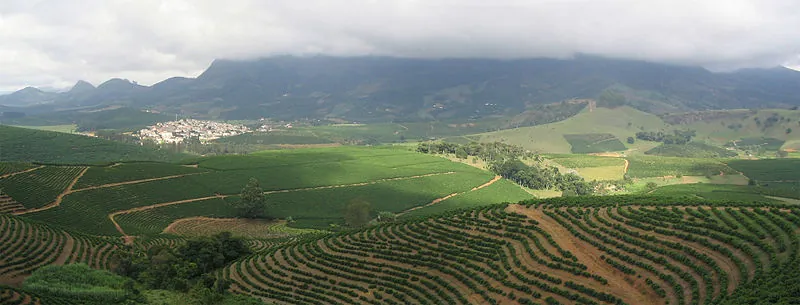
The slopes of Mount Kilimanjaro (5,895m) in northern Tanzania represent one of the world's most dramatic coffee-growing environments — not because of the mountain's altitude (coffee grows at 1,200–1,800m on its lower flanks, well below the summit snow) but because of the mountain's effect on the microclimate. Kilimanjaro generates its own weather systems: cloud forests at mid-elevation retain moisture, volcanic soils provide exceptional mineral content, and the combination of high solar radiation during the day and temperature drops at night creates significant diurnal variation that concentrates flavour compounds in the coffee cherry.
The dominant producers in the Kilimanjaro region are the Chagga people — the indigenous mountain community who have cultivated coffee under the shade of banana trees for over a century, using a traditional agroforestry system that integrates coffee with food crops, banana, and timber trees. The Chagga approach — which produces lower yields than full-sun monoculture but higher quality and greater biodiversity — has become a model of interest to sustainable coffee researchers. The resulting coffees carry the typical East African character (wine-like acidity, fruit notes) but with a heavier body and a subtle earthiness that the volcanic soil imparts.
Key cooperatives: KNCU (Kilimanjaro Native Cooperative Union) — one of Africa's oldest coffee cooperatives, founded in 1933 during the British colonial period — and a cluster of smaller cooperatives in the Moshi and Arusha areas that have developed specialty processing and direct trade relationships with European and North American roasters.
The Mbinga District: Tanzania's Specialty Star
While Kilimanjaro provides the famous address, many Tanzania specialists argue that the country's finest coffee comes from a very different location: the Mbinga district in Ruvuma Region in southwestern Tanzania, near the border with Malawi and Mozambique. This remote, high-altitude area (1,400–1,800m) in the highlands above Lake Nyasa (Lake Malawi) is far from the tourist circuits and receives little attention from coffee media, but its coffees — grown by smallholder farmers through the MBICU cooperative system — have been producing lots of exceptional quality.
The Mbinga profile: brighter acidity than Kilimanjaro, more prominent red fruit (blackcurrant, cherry), floral notes reminiscent of good Kenyan coffee, and a clean, extended finish. Some Mbinga lots score 88–91 in specialty evaluation — firmly in Kenya-competitive territory. For specialty buyers willing to work through the less developed Tanzanian export infrastructure, Mbinga represents one of the best value propositions in African specialty coffee.
Tanzania Peaberry: The Specialty Icon
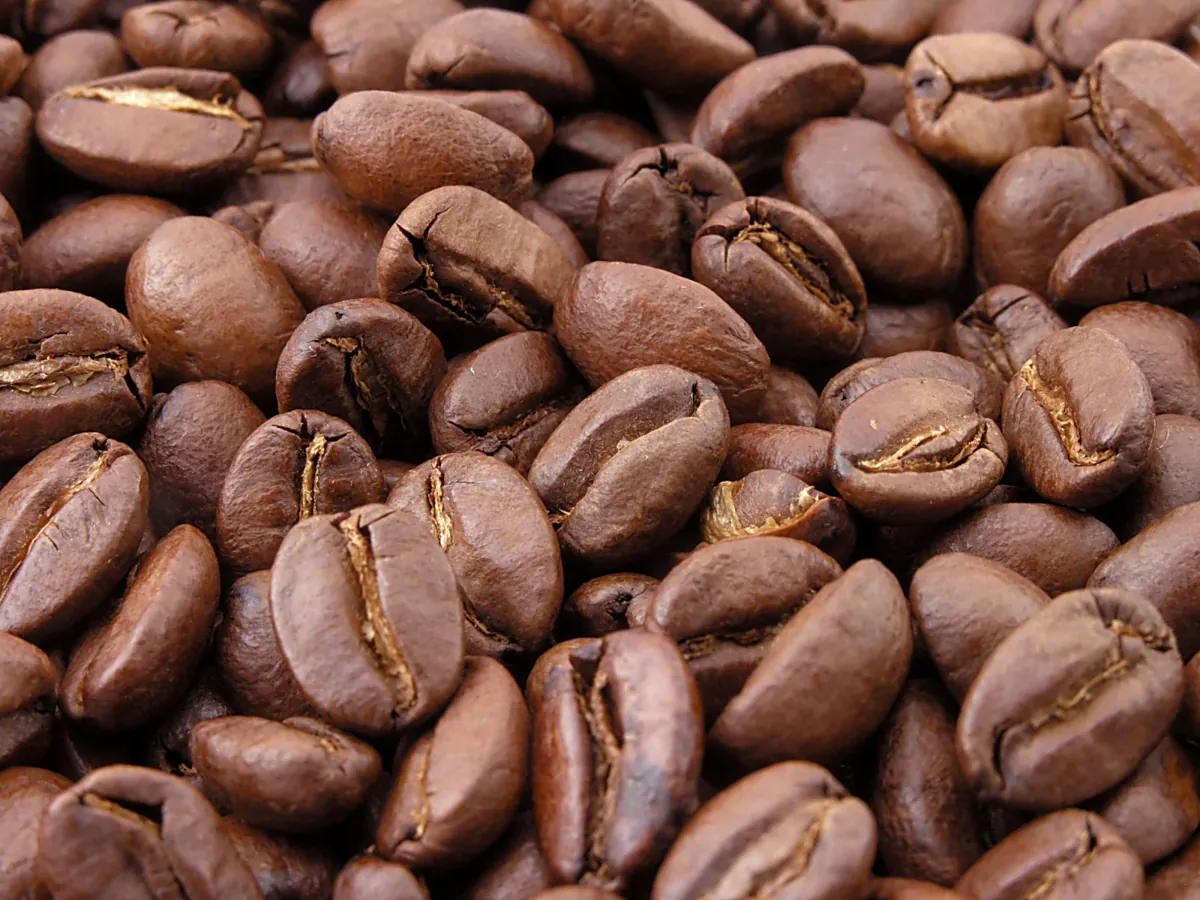
Tanzania is best known in the global specialty market for one specific product: Tanzania Peaberry. A peaberry (also called caracol — snail — in Spanish) is a natural mutation that occurs in approximately 5–10% of coffee cherries: rather than the usual two flat-sided seeds developing within the cherry, only one seed develops and grows round, occupying the entire space of the cherry.
The specialty value of peaberry coffee is a genuine subject of debate:
- The argument for: The single seed receives all the nutrients normally shared between two, potentially concentrating flavour; the round shape roasts more evenly (both sides of the bean receive equal heat); some experienced tasters find peaberry coffee from good origins to have more concentrated and vibrant character than the same origin's flat beans.
- The argument against: Double-blind studies comparing peaberry and flat beans from the same lot frequently fail to show statistically significant quality differences; the premium paid for peaberry is at least partly a marketing construction rather than a reliable quality indicator.
Tanzania Peaberry commands a significant price premium in international markets — largely driven by Japanese buyers who have historically valued it highly, in a pattern similar to Jamaica Blue Mountain. Whether or not peaberry is objectively superior, Tanzania Peaberry from a quality Kilimanjaro or Mbinga source is a legitimate specialty experience — clean, bright, structured, and distinctly Tanzanian.
Varietals Grown in Tanzania
Tanzania's coffee varietal landscape is more diverse than most East African countries:
- Kent: A variety developed in India in the 1920s for disease resistance; widely planted during the British colonial period and still dominant in many Tanzanian farms. Medium quality ceiling, reliable production.
- Bourbon: The classic high-quality varietal, grown primarily in Mbinga and at higher altitudes. Responsible for most of Tanzania's best specialty lots.
- Blue Mountain: A Jamaican varietal introduced during the colonial period, grown in small quantities around Kilimanjaro. Produces a mild, rounded cup reminiscent of its Caribbean origin.
- N39 and other hybrids: Disease-resistant hybrids introduced in recent decades to combat coffee berry disease (CBD), which devastated the Kilimanjaro crop in the 1960s. Lower quality potential than Bourbon but more reliable yields.
The Production System: Challenges and Opportunities
Tanzania's coffee sector faces structural challenges that limit its specialty potential:
- Government auction system: Like Kenya, Tanzania operates a mandatory auction system — but less transparent and with a more complex intermediary chain that reduces farmer premiums and slows the development of direct trade relationships
- Post-harvest infrastructure: Wet mills (washing stations) are less developed than in Rwanda or Kenya — inconsistent processing quality reduces even good-origin coffee below its potential
- Smallholder fragmentation: Most coffee is grown by smallholders with under 1 hectare of coffee — cooperative organisation (when functioning well) is the key to quality improvement
The positive trajectory: several specialty-focused export companies (DW Alexander, Taylor Winch, African Coffee Exporters) have been building direct relationships with cooperatives, funding wet mill upgrades, and delivering Tanzanian lots consistently to international specialty buyers. The Cup of Excellence programme arrived in Tanzania in 2020, with early results showing the quality potential is genuinely world-class when the processing chain functions well.
Related: Kenya AA: Africa's Most Complex Cup | Coffee in Africa Beyond Ethiopia: Rwanda, Uganda, Burundi