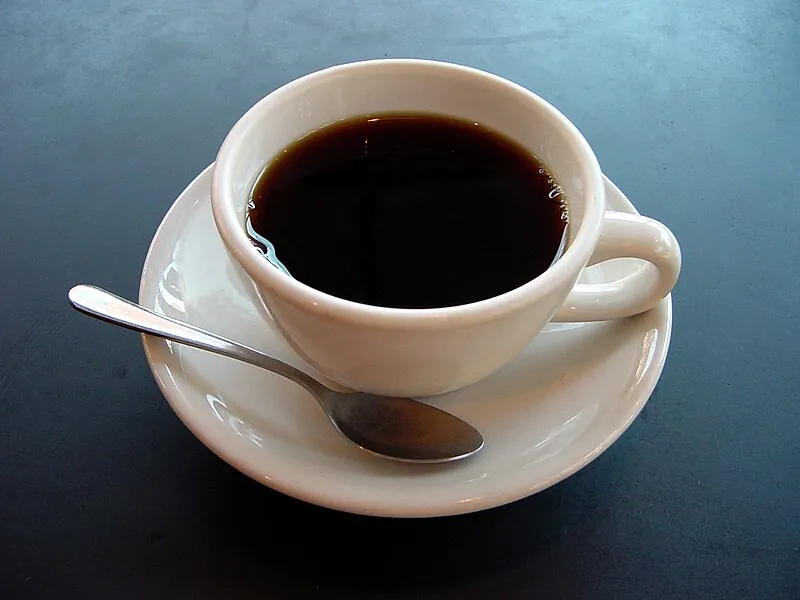
The most common caffeine mistake that coffee drinkers make is not drinking too much coffee but drinking it too late. A 2013 study published in the Journal of Clinical Sleep Medicine by Drake, Roehrs, Shambroom, and Roth at the Henry Ford Sleep Disorders & Research Center administered 400 mg of caffeine (approximately three to four cups of drip coffee) to participants at three time points: 6 hours before bed, 3 hours before bed, and at bedtime. Even the 6-hour-before-bedtime dose, relative to placebo, resulted in objectively measurable reductions in total sleep time as recorded by wrist actigraphy. The participants in the 6-hour group reported not feeling that their sleep was disrupted, yet the objective data showed it was. This gap between perceived and actual sleep quality under caffeine influence is one of the central findings of caffeine and sleep research, and it explains why so many habitual coffee drinkers are chronically sleep-deprived without attributing it to their afternoon coffee habit.
How Caffeine Works: Adenosine Blockade
Caffeine's mechanism of action is primarily as an adenosine receptor antagonist. Adenosine is a neuromodulator that accumulates in the brain during waking hours as a byproduct of neural activity. As adenosine builds up throughout the day, it progressively binds to A1 and A2A adenosine receptors in the brain, inhibiting neural activity and producing the subjective experience of increasing sleepiness and the drive toward sleep. This accumulation is called "sleep pressure" or "homeostatic sleep drive," and it is one of the two primary biological systems regulating sleep, alongside the circadian clock.
Caffeine molecules are structurally similar to adenosine and compete for the same binding sites. When caffeine occupies adenosine receptors, adenosine cannot bind, and the sleep pressure signal is blocked. The brain continues operating at its waking activity level because the molecular signal telling it to slow down is being intercepted. This is not stimulation in the same sense as adrenaline or amphetamines, which directly increase neural activity. It is blockade of inhibition. The distinction matters because it explains the "adenosine rebound" effect.
While caffeine is blocking adenosine receptors, the body continues to produce adenosine at its normal rate. The adenosine molecules that cannot bind to their receptors accumulate in extracellular space. When caffeine is metabolised and cleared from the body, all of that accumulated adenosine suddenly has access to its receptors, producing a sharper and more pronounced sleep pressure signal than would have occurred without the caffeine. This is the mechanism behind the familiar phenomenon of the afternoon "caffeine crash": a wave of fatigue that hits harder than the pre-caffeine baseline because of the rebound adenosine load. For people who manage the crash by drinking another coffee, the cycle continues into the evening, progressively degrading sleep quality over days, weeks, and years of habitual use.
Caffeine Half-Life: What It Means and Why It Varies
The half-life of caffeine, the time required for the body to eliminate 50 percent of an ingested dose, averages 5 to 7 hours in healthy adults, according to pharmacological reviews including the comprehensive 2003 Pharmacokinetics of caffeine review by Fredholm et al. in Pharmacological Reviews. This means that a 200 mg caffeine dose (approximately two cups of drip coffee) at 2:00 pm will still have 100 mg active in the bloodstream at 7:00 pm to 9:00 pm, and 50 mg still active at midnight to 2:00 am, if bedtime is at 10:00 pm to 11:00 pm.
Individual caffeine half-life varies significantly and is determined primarily by genetic factors affecting the cytochrome P450 1A2 (CYP1A2) enzyme in the liver, which is responsible for the majority of caffeine metabolism. People with the "fast metaboliser" variant of the CYP1A2 gene metabolise caffeine roughly twice as quickly as "slow metabolisers," producing a half-life of approximately 3 to 4 hours in fast metabolisers versus 8 to 10 hours in slow metabolisers. A 2006 study by Cornelis, El-Sohemy, Kabagambe, and Campos published in JAMA found that slow caffeine metabolisers had an increased risk of non-fatal myocardial infarction associated with higher coffee consumption, while fast metabolisers showed no such increase, suggesting that the same caffeine intake produces meaningfully different physiological effects depending on metabolic rate.
Other factors affecting caffeine half-life include pregnancy (which slows caffeine metabolism significantly, extending half-life to 15 to 18 hours in the third trimester, which is why obstetric guidelines recommend a 200 mg daily limit for pregnant women), liver disease, concurrent medications (particularly oral contraceptives, which extend caffeine half-life by approximately 40 to 65 percent according to the Pharmacological Reviews analysis), and smoking (which accelerates caffeine metabolism by inducing CYP1A2 activity).
Chronotypes and the Timing Question
Chronotype refers to the individual variation in the timing of the circadian rhythm: "morning types" (commonly called early birds or larks) have circadian clocks that run slightly ahead of the social norm, reaching peak alertness earlier in the day and experiencing earlier onset of melatonin secretion in the evening. "Evening types" (night owls) have circadian clocks running behind the social norm, reaching peak alertness later and experiencing delayed melatonin onset. A minority of the population sits at either extreme, while most people fall somewhere in a continuous distribution between the two.
Chronotype matters for caffeine timing because it determines when sleep pressure and circadian alerting signals align or conflict. Matthew Walker, professor of neuroscience and psychology at the University of California, Berkeley, and author of Why We Sleep (2017), discusses chronotype extensively in the context of sleep optimization. Evening types face a particular disadvantage in caffeine management: their natural bedtime preference is already later than the social norm (school start times, work schedules), and their later peak alertness means they may genuinely need caffeine support at times of day that their social schedule demands alertness. The resulting pattern, a night-owl forced to rise early using multiple cups of coffee, produces a situation where caffeine timing relative to the true chronotype-adjusted bedtime is even more problematic than it appears by clock time.
Research by Till Roenneberg at Ludwig Maximilian University Munich, based on data from the Munich Chronotype Questionnaire (MCTQ) collected from hundreds of thousands of participants, has documented "social jetlag" as a significant public health phenomenon: the discrepancy between biological sleep timing and social schedule timing, which for evening types is analogous to weekly transatlantic time zone travel. Caffeine use is one of the primary coping mechanisms for social jetlag, creating a feedback cycle that makes the underlying chronotype-schedule mismatch harder to address.
The Last Cup Calculator: When Should You Stop?
A practical caffeine cutoff time can be estimated using a straightforward formula based on desired sleep onset time, average caffeine half-life, and the threshold below which caffeine is unlikely to measurably affect sleep. Pharmacological consensus places the "negligible effect" threshold at approximately 25 mg of caffeine remaining in circulation, which represents two complete half-life eliminations from a standard 100 mg dose, or approximately four half-lives from a 400 mg dose.
For a person with an average 6-hour half-life who targets sleep at 10:30 pm:
- A 100 mg dose (one standard drip coffee) reduces to 25 mg after two half-lives (12 hours), meaning a 10:30 am final coffee is the conservative guideline.
- A 200 mg dose (two cups or a large drip coffee) reduces to 25 mg after approximately 2.75 half-lives (16.5 hours), meaning an 8:00 am cut-off is required for full clearance by 10:30 pm.
- A 100 mg dose using the less conservative "half remaining" approach (50 mg at one half-life) suggests a 4:30 pm last cup for a 10:30 pm bedtime.
The Drake et al. study cited above suggests that even a 6-hours-before-bed cutoff is insufficient for objective sleep quality preservation when the dose is 400 mg. For most practical purposes, a simple rule of thumb supported by sleep scientists including Walker is to avoid caffeine after 2:00 pm (for average evening sleepers with a 10:00 to 11:00 pm bedtime). For morning types who sleep at 9:00 to 9:30 pm, noon is a more appropriate cutoff. For late chronotypes who sleep at midnight, 4:00 to 5:00 pm is a reasonable limit.
Sleep Architecture and Caffeine: What Actually Changes
Caffeine's effects on sleep are not limited to sleep onset (falling asleep) or total sleep duration. Research using polysomnography, the gold-standard clinical sleep measurement technique, has documented that even doses that do not prevent sleep onset significantly alter sleep architecture, specifically reducing slow-wave sleep (SWS, also called deep sleep or N3 stage sleep). A 1994 study by Landolt, Dijk, Gaus, and Borbély published in Sleep found that 200 mg of caffeine administered at bedtime reduced SWS by approximately 20 percent and shifted slow-wave activity (the electroencephalographic marker of restorative sleep intensity) toward later in the night.
Slow-wave sleep is the stage associated with the most physically restorative processes: growth hormone secretion peaks during SWS, immune function consolidation occurs during SWS, and the glymphatic system, which clears metabolic waste from the brain including amyloid-beta proteins implicated in Alzheimer's disease, operates most actively during SWS. Reducing SWS without necessarily reducing total sleep time or sleep self-perception is a significant health concern that receives less public attention than the simpler narrative of "caffeine keeps you awake."
Practical Adjustments for Heavy Coffee Drinkers
For people who drink coffee heavily and have poor sleep quality, the evidence supports a tiered approach to behaviour change. Abrupt caffeine cessation produces withdrawal symptoms including headaches, fatigue, irritability, and difficulty concentrating that peak at 24 to 48 hours and typically resolve within 4 to 7 days. Gradual reduction by approximately 10 percent per day avoids the worst withdrawal effects while allowing the body's adenosine receptor regulation to readjust progressively.
Decaf coffee in the afternoon is a behaviorally compatible substitution that addresses the ritual dimension of the habit without the pharmacological disruption. High-quality decaffeinated espresso using Swiss Water Process or supercritical CO2 decaffeination retains most of coffee's flavour compounds while removing 97 to 99.9 percent of caffeine. The psychological ritual of the afternoon coffee break, the mug, the aroma, the pause from work, is preserved without the sleep consequence. L-theanine supplementation (100 to 200 mg, the dose found in several cups of green tea) in the afternoon has been examined as a partial substitute for caffeine's cognitive effects without its sleep-disrupting properties, with modest supporting evidence from the Owen et al. studies cited in related coffee and tea research.
The fundamental reframe that sleep researchers advocate is treating sleep not as time that caffeine competes with but as the foundation on which all of caffeine's cognitive benefits rest. A well-slept brain processes caffeine more efficiently, is more sensitive to its effects at lower doses, and recovers more completely from its inevitable metabolic clearance. The habitual heavy coffee drinker who sleeps poorly is, in a pharmacological sense, using caffeine to partially repair the cognitive damage that their caffeine use helped create. Optimising the timing rather than the quantity of caffeine consumption is the most evidence-backed intervention for breaking that cycle.
Related: Caffeine Science: How It Works, Half-Life, and Tolerance | Decaf Coffee: How It Is Made and Whether It Tastes Different