Intermittent fasting has become one of the most widely practiced dietary strategies in the world, with approximately 10 percent of American adults reporting regular fasting windows as of 2023 according to the International Food Information Council's annual Food and Health Survey. The most frequently asked question among new fasting practitioners is whether black coffee, containing virtually zero calories (approximately 2 calories per 8-ounce cup), disrupts the fast. The answer depends on what you mean by "break a fast," because fasting is not a single physiological state but a cluster of distinct processes (caloric restriction, insulin suppression, autophagy induction, ketogenesis) each of which responds differently to coffee's bioactive compounds. This article works through each dimension of the question with reference to the available research, including the widely cited 2023 study in Cell Metabolism that has reshaped parts of the debate.
What Happens During a Fast: The Key Processes
When a person stops eating, several physiological processes unfold on different timelines. Within 6 to 8 hours of the last meal, blood glucose returns to baseline and glycogen stores begin to be mobilized. Insulin levels fall as there is no dietary carbohydrate to process. Between 12 and 16 hours, ketogenesis begins as the liver converts fatty acids to ketone bodies for fuel in the absence of sufficient glucose. Autophagy, the cellular self-cleaning process in which cells break down and recycle damaged proteins and organelles, is upregulated beginning around 12 to 24 hours of fasting in most studies, with its intensity increasing with fast duration. These processes have different sensitivities to exogenous compounds, and coffee affects each of them differently.
Caloric Impact: Effectively Zero
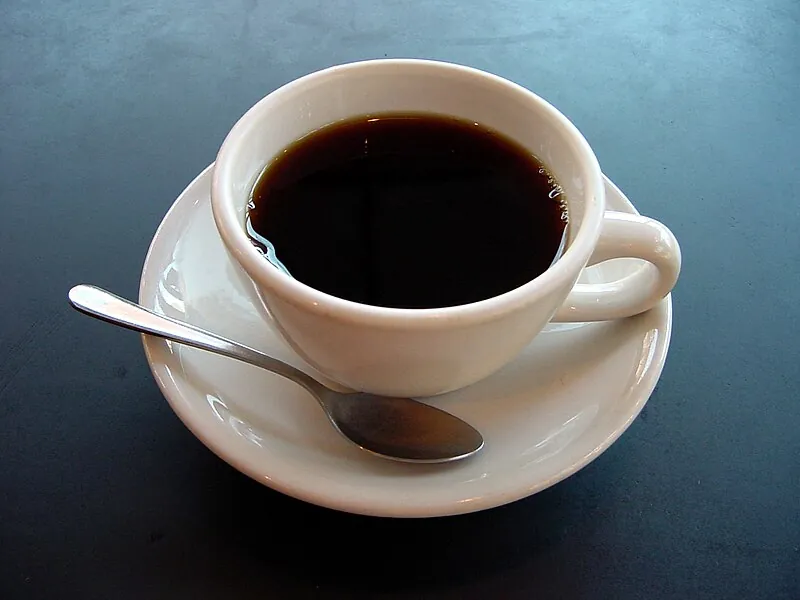
Black coffee brewed from ground beans without any additions (no milk, cream, butter, coconut oil, or sweeteners) contains approximately 1 to 5 calories per 8-ounce serving, depending on brew strength. These calories come almost entirely from a negligible amount of dissolved protein and trace lipids in the coffee. For the purposes of a caloric fast, where the restriction of caloric intake is the primary goal, black coffee does not break a fast. There is no meaningful caloric content to disrupt energy restriction, and the body does not shift out of a caloric deficit in response to a cup of black coffee. Adding any dairy (even a small splash of milk contributes 5 to 10 calories and triggers an insulin response) or sugar immediately and definitively breaks a caloric fast, which is why the question specifically concerns black coffee rather than coffee generally.
Insulin Response: What the Evidence Shows
The insulin question is more nuanced. Insulin is secreted by the pancreas primarily in response to blood glucose elevation, which black coffee does not cause. Multiple studies have confirmed that black coffee consumed during a fasting window does not produce a meaningful insulin spike in healthy individuals. However, coffee does not have zero effect on insulin physiology. Caffeine has been shown in several studies to slightly increase insulin resistance (reducing tissue sensitivity to insulin) acutely, which is the opposite of the fasting-related benefit of improved insulin sensitivity over time. A 2004 study by Lane et al. in Diabetes Care found that caffeine equivalent to 2.5 cups of coffee reduced insulin-stimulated glucose disposal by approximately 15 percent in the 5 hours following consumption in healthy adults.
The practical significance of this effect during a fast depends on context. If the fasting goal is specifically insulin sensitivity improvement (as in protocols used for prediabetes management or metabolic syndrome), caffeine's acute insulin-resistance effect is a potential concern. If the fasting goal is simply caloric restriction, weight loss, or a defined eating window, the effect is unlikely to be clinically meaningful for most people. The same 2004 Lane study noted that regular habitual coffee drinkers showed attenuation of this acute insulin-resistance effect over time, suggesting that chronic coffee consumption normalizes it through adaptation.
Chlorogenic Acids and Fasting: The Complicating Factor
Coffee's chlorogenic acids (CGAs), present at 250 to 550 mg per 8-ounce cup, directly affect glucose metabolism by inhibiting the enzyme glucose-6-phosphatase in the liver, which is involved in hepatic glucose production. In a fed state, this glucose-lowering effect is generally beneficial for blood sugar control. In a fasting state, it becomes more complex: the body during fasting is actively engaged in gluconeogenesis (producing glucose from non-carbohydrate sources) to maintain blood glucose for the brain. CGA's inhibition of this process could theoretically interfere with the body's fasting glucose regulation, though this mechanism has not been studied directly in a human intermittent fasting context as of 2025. The available evidence from diabetic populations (where CGAs are studied as a blood-sugar management tool) suggests the effect is modest and self-limiting at typical coffee serving sizes.
Autophagy: The 2023 Cell Metabolism Study
The most contentious dimension of the coffee-fasting debate concerns autophagy. Autophagy, from the Greek meaning "self-eating," is the cellular degradation pathway through which cells break down damaged proteins, dysfunctional organelles, and intracellular pathogens, recycling their components for energy and cellular repair. It is increasingly studied as a mechanism underlying the longevity-associated benefits of fasting and caloric restriction, and elevated autophagy has been proposed as a contributing factor to cancer protection, reduced neurodegeneration, and metabolic health improvements associated with intermittent fasting.
In 2023, a study published in Cell Metabolism by Jansen et al. examined the effect of coffee consumption during a fasting window on autophagy markers in human subjects. The study used 14 participants who underwent three conditions: a 4-hour fast with no drinks, a 4-hour fast with black coffee, and a 4-hour fast with coffee containing a small amount of cream. The researchers measured autophagy markers including LC3B-II/LC3B-I ratio and p62 protein levels in peripheral blood mononuclear cells (PBMCs) as proxies for autophagic activity. The key finding was that both black coffee and coffee with cream suppressed autophagy markers relative to the water fast alone, with black coffee producing a statistically significant reduction in autophagic flux compared to water fasting alone, and coffee with cream producing an even greater suppression.
The study generated substantial media coverage but requires important caveats before drawing sweeping conclusions. First, the participants were fasted for only 4 hours, which is near the lower threshold of meaningful autophagy induction; autophagy's most significant effects emerge at 12 to 24 hours, not at 4. Second, the PBMC proxy for autophagy, while practical for human studies, may not accurately reflect autophagy in liver, brain, or muscle tissue, which are the primary sites of fasting-induced autophagy. Third, 14 participants is a very small sample size for a complex physiological question. Fourth, the magnitude of the suppression, while statistically significant, was modest. The study is best understood as a signal worth investigating further rather than definitive evidence that coffee eliminates autophagy during fasting. The authors themselves note that the clinical significance of the finding for longer, more physiologically meaningful fasts remains unknown.
Ketogenesis and Fat Oxidation
Black coffee's effect on ketogenesis is, if anything, mildly positive from a fasting perspective. Caffeine is a known stimulant of lipolysis (fat breakdown) and has been shown to increase circulating free fatty acids, which are the substrate for hepatic ketone production. A 2020 study in the Journal of Nutritional Biochemistry found that caffeine at a dose of 3 mg per kilogram of body weight increased ketone body production by approximately 17 percent in healthy fasted subjects over 3 hours compared to placebo. This suggests that coffee during a fasting window may, in fact, support rather than undermine the shift to fat oxidation that fasting protocols aim to achieve, a finding that aligns with the anecdotal reports of fasting practitioners who find that coffee extends their comfortable fasting window by reducing appetite and increasing energy.
Practical Guidance
The question "does black coffee break a fast?" is best answered by clarifying what the fast is for. For caloric restriction fasts: No. For insulin management fasts: Probably not meaningfully, especially in habitual coffee drinkers, but people with prediabetes or insulin resistance managing their condition through fasting should discuss caffeine's acute insulin effects with their physician. For autophagy-focused fasts (extended fasts of 16 to 48 hours): Possibly, based on the 2023 Cell Metabolism study, though the magnitude and clinical significance remain unclear. For ketogenic or fat-oxidation fasts: Coffee likely supports rather than inhibits the process.
Adding any caloric substance to coffee, including a teaspoon of coconut oil (120 calories), a tablespoon of heavy cream (52 calories), or any form of sweetener that triggers an insulin response, does break a metabolic fast regardless of the fasting goal. Butter coffee (Bulletproof coffee), popular in some fasting communities, contains 200 to 400 calories and definitively breaks a caloric fast, though proponents argue it sustains ketosis, a different claim that is more supportable by available evidence. The purest fasting window remains water, black coffee, and plain tea only, and among those three, the available evidence does not support excluding black coffee on any currently proven fasting-relevant basis except autophagy, and even there the evidence is preliminary and context-dependent.
Related: Coffee and Blood Pressure: What the Studies Show | Coffee and Diabetes: The Research on Blood Sugar and Risk